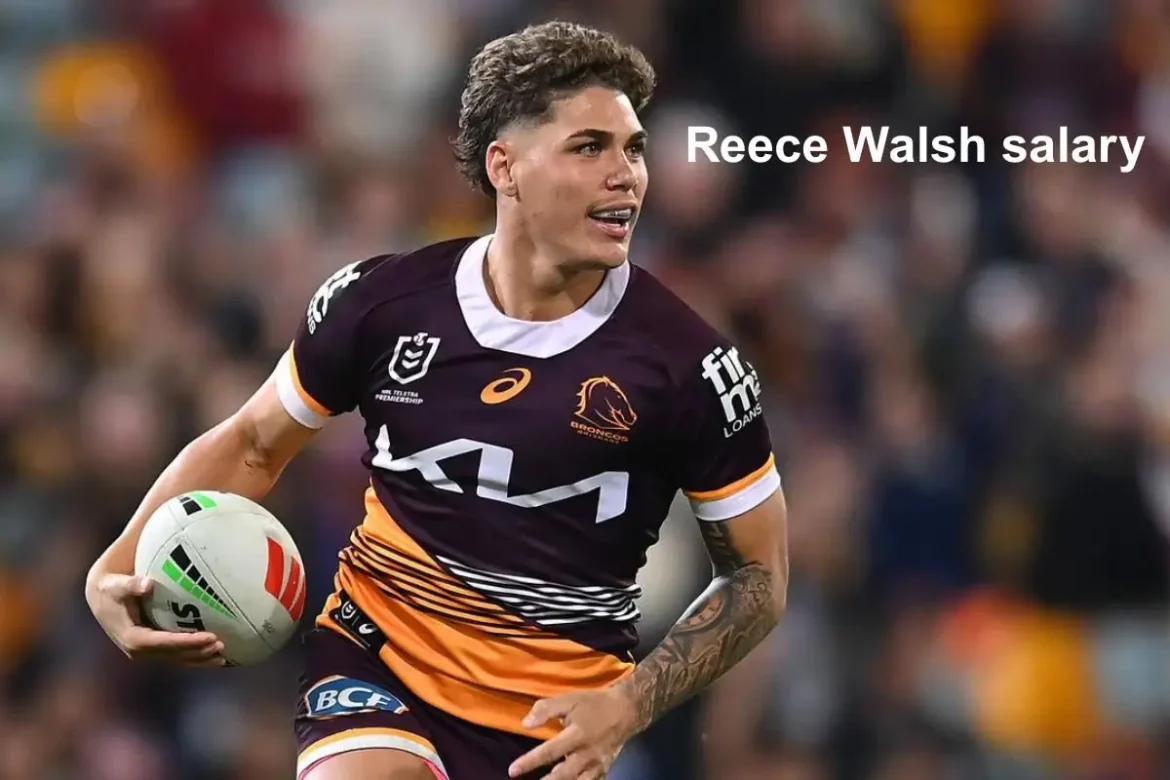
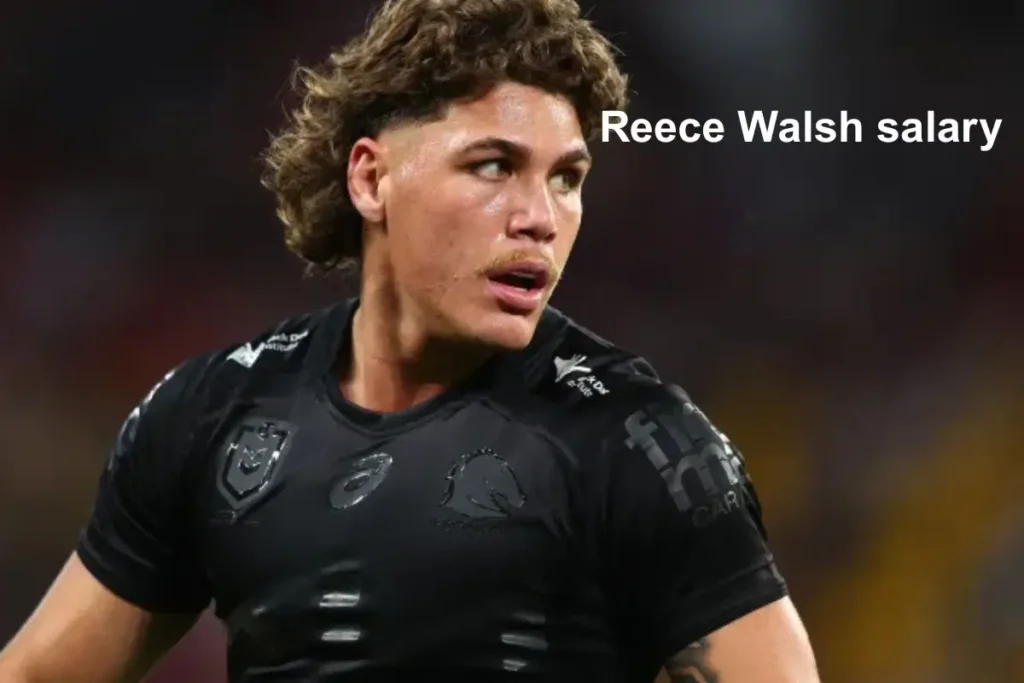
The Brisbane Broncos have entered a new era, one defined by superstar fullback Reece Walsh and one of the most significant contracts in modern NRL history. When reports emerged that Walsh had agreed to a four-year, $5 million extension, the rugby league world immediately understood what it meant: the Broncos now have one of the most electrifying players in the competition locked in for the long term. But this enormous investment carries consequences that ripple well beyond the highlight reels Walsh produces weekly. The deal pushes the Broncos into a top-heavy salary-cap structure, forces critical roster decisions, jeopardises the futures of multiple first-grade stars, and shapes the club’s strategy for the next half-decade.
This is far more than a simple contract extension. It is the centrepiece of what may become one of the most dramatic rebuilds and recalibrations in recent Broncos history. The decision to elevate Walsh into the elite salary bracket requires sacrifices, risks, and calculated bets on youth. It also signals how the Broncos see the next generation of their spine developing, with a clear long-term view for forward leadership and backline structure.
To understand the full impact of this deal, we need to look not just at the dollar value but at the players who are now at risk, the signings Brisbane can no longer pursue, and the young talent the club must now trust to fill major roles. This blog explores every angle of how Walsh’s megadeal reshapes the future of the Broncos.
Walsh’s Historic Contract and the Rise of a Modern NRL Superstar
Reece Walsh’s ascendancy has been rapid but expected. From the moment he returned to Brisbane in 2023, his game exploded. His speed, footwork, confidence, and natural star quality turned him into the NRL’s most marketable young talent. Sponsors gravitated to him. Broadcasters highlighted him in every promo. Young fans wore his jersey to every match. In many ways, Walsh became the visual identity of the Broncos’ future.
So when reports broke via Pete Badel that the Broncos and Walsh had agreed to terms on a deal worth around $5 million, the figure didn’t shock insiders. Veteran journalist Brent Read even noted the deal had been in the works for a long time, with both sides comfortable that the framework was essentially set. For Brisbane, letting Walsh explore the open market would have been unthinkable. For Walsh, the Broncos provided stability, star power, and the ideal environment to build his legacy.
Walsh’s new average salary of around $1.25 million per season makes him the second-highest paid player in the NRL, sitting only behind Newcastle’s Kalyn Ponga. Phil Rothfield famously said Walsh is worth every cent because of the commercial pull he brings. Unlike many players who are simply paid for on-field output, Walsh lifts an entire organisation’s market value. In modern rugby league, that is almost priceless.
But financial gravity always brings consequences, and Walsh’s enormous salary instantly shifted Brisbane’s cap balance into dangerous territory.
How Walsh’s Deal Creates a Severe Salary-Cap Squeeze
The Broncos are no strangers to managing star-heavy rosters, but rarely has the club seen a situation where four players command such enormous portions of the salary cap. In addition to Walsh’s new deal, three other major upgrades have recently been finalised. Ezra Mam received a substantial pay rise that pushes him close to the top tier of five-eighth salaries. Payne Haas secured one of the richest forward contracts in NRL history. Patrick Carrigan also signed a significant extension reflecting his standing as a future Brisbane captain.
Each of these players deserves every dollar they receive, but the cumulative effect on the club’s cap has become impossible to ignore. All four athletes are elite, all are central to the club’s identity, and all are essential to its performance. But the numbers are unforgiving. With such a large portion of cap space allocated to this core group, Brisbane must now make difficult decisions on the rest of the squad.
This squeeze doesn’t simply affect fringe players or depth options. It impacts genuine stars. And none are under more scrutiny than the club’s two explosive centres: Kotoni Staggs and Selwyn Cobbo.
Why the Broncos Will Likely Lose Either Staggs or Cobbo — or Both
The timing of Walsh’s deal aligns awkwardly with the contract cycles of two of Brisbane’s most valuable outside backs. Kotoni Staggs and Selwyn Cobbo both become free agents on November 1, meaning they can negotiate with rival clubs for 2026 and beyond. Their futures now hang precariously in the balance.
The NRL360 analysis was blunt: it is almost impossible for Brisbane to retain both. And even keeping one would require major pay cuts that neither player is likely to accept when they enter the open market. Staggs remains one of the most destructive ball-carrying centres in the game, capable of breaking a match open with his physicality and footwork. Cobbo is one of the most naturally gifted young talents in the league, a player who brings speed, aerial dominance and finishing ability.
In a perfect world, the Broncos would keep both. But Walsh’s megadeal has squeezed that luxury out of the equation. Rival clubs will now attack Brisbane’s roster aggressively, knowing the club does not have the cap space to match big offers. Staggs and Cobbo are prime targets, and clubs with cap flexibility will be circling.
This is the immediate roster casualty of the Walsh extension, and the Broncos must accept that at least one high-profile backline star will depart because of it.
The Sam Walker Dream Is Over: Why Brisbane Cannot Enter That Race
Before Walsh’s deal was finalised, there was speculation that the Broncos might consider chasing Roosters halfback Sam Walker, especially with his Queensland origins. His contract situation had opened the door to potential offers, and Brisbane would always have been an attractive destination for a young playmaker seeking a pathway to Origin and long-term success.
However, once Walsh’s extension was structured, that possibility disintegrated. Walker’s market value has surged beyond the million-dollar mark, and Brisbane no longer has the financial room to make such an offer. Phil Rothfield stated clearly that half the competition wants Walker, but only clubs with cap space can seriously consider him. Brisbane is not one of them.
This is a crucial turning point. With Adam Reynolds nearing the end of his career, the club must plan for the post-Reynolds era. But Walsh’s contract has reshaped how that plan must unfold.
Cody Black and the Broncos’ Long-Term Halfback Succession Plan
With Walker financially unrealistic, the Broncos have turned their attention inward. Brent Read revealed that Brisbane has already earmarked a young halfback, Cody Black, as the long-term successor to Adam Reynolds. Black is viewed as a highly talented organiser with the kicking, structure and maturity needed to develop into a future NRL No. 7. The club has invested years into his progression and is unwilling to discard that developmental pathway.
This is the strategic consequence of the Walsh deal. Brisbane must now rely more heavily on internal player development rather than the external recruitment of expensive marquee halves. It is not a disadvantage — the Broncos are known for developing exceptional playmakers — but it does require patience, trust and long-term planning.
Reynolds will not play forever, and Black is being groomed for the role. If he fulfils his potential, Brisbane’s future spine could be one of the most dangerous in the NRL, with Mam and Walsh already entrenched.
Toby Sexton as a Short-Term Option for the Halfback Role
Though Black is the long-term solution, the Broncos may still need a transitional halfback to bridge the gap once Reynolds departs. This is where the surprising name of Toby Sexton enters the conversation. Sexton, who has bounced between clubs in recent seasons, provides experience, control and a far more affordable salary profile than a marquee half like Walker.
Phil Rothfield floated the possibility of Brisbane targeting a player of Sexton’s profile. He fits the practical constraints of the club’s cap, and his game style aligns with what the Broncos may need in the interim: organisation, composure and a willingness to act as a facilitator next to Mam and Walsh.
It is unlikely that Sexton would be seen as the long-term answer, but as a stopgap option, he is a logical candidate.
The Reality of Top-Heavy Rosters in the Modern NRL
Brisbane’s position is not unique. Across the NRL, clubs are learning that the era of evenly distributed salaries is fading. The best players now command enormous deals, and clubs must choose which stars to build around. When that decision is made, sacrifices become unavoidable.
In the Broncos’ case, the club has chosen a spine built on Mam, Walsh and eventually Black, with Haas and Carrigan anchoring the forward pack. Building a championship-calibre roster around that group is possible, but it requires precision and discipline in recruitment.
Depth becomes harder to maintain. Fringe players must develop faster. Young players must be ready sooner. The Broncos have entered a phase where internal pathways will be just as important as marquee signings.
Walsh’s contract accelerates this shift. It forces clarity, and it forces decisiveness. The club must balance star power with affordability, and every contract from here will be viewed through the lens of cap management.
The Commercial Impact: Why Walsh Is Worth the Investment
The financial implications of Walsh’s deal often overshadow the commercial dimension, but the latter is equally important. Reece Walsh is not simply an NRL player. He is a brand asset. He sells jerseys, generates broadcast interest and elevates the Broncos’ national footprint. Sponsors actively seek association with him, and his presence boosts engagement across all club platforms.
Phil Rothfield highlighted the importance of this commercial value. For a club like Brisbane, marketability can be just as critical as on-field ability when evaluating major contracts. Walsh’s influence extends beyond tries and line breaks. He is an ambassador for the club and a face of the competition.
This intangible value supports the logic of Brisbane’s massive investment. In many ways, the Broncos are not just paying for performance — they are paying for profile, prestige and future generational appeal.
What the Future Looks Like for Brisbane
The next five years of Broncos football will revolve around Walsh, Mam, Haas and Carrigan. These players are the pillars of the club’s identity and strategy. The challenge will be filling the remaining positions cost-effectively without sacrificing quality.
Losing either Staggs or Cobbo will hurt. Possibly losing both will hurt even more. Transitioning into life after Adam Reynolds will be the next major test. Managing expectations around young talent, especially Cody Black, will require patience.
But Brisbane has committed to a direction — fast, skilful, dynamic football led by a superstar fullback who represents the future face of the NRL. The Walsh deal is a gamble in some areas but a masterstroke in others. The club has chosen its cornerstone, and now every decision will flow from that.
Conclusion
Reece Walsh’s four-year, $5 million extension is one of the most influential contract decisions of the modern NRL era. It secures a generational fullback, strengthens the Broncos’ brand, and shapes their on-field identity for years to come. But the deal also brings unavoidable challenges. Salary-cap pressure will force the departure of key players. Recruitment options will narrow. Young talent must accelerate its development. And the club must navigate the transition from the Adam Reynolds era into one led by Ezra Mam and eventually Cody Black.
What makes this story compelling is that Brisbane has made a conscious decision: they believe Walsh is worth the sacrifices. They believe he is the type of player a club can build a dynasty around. And they believe the future, though complicated, is brighter with him in it.
Only time will tell how the gamble plays out. But for now, the Broncos have secured their superstar and reshaped their entire future in the process.
FAQs
Who is the highest paid Bronco player?
As of late 2024–2025 reporting, Reece Walsh is set to become the highest paid Brisbane Broncos player once his new extension fully kicks in.
His four-year deal is reportedly worth around $5 million, averaging about $1.25 million per season, which puts him above other big Broncos earners like Payne Haas and Ezra Mam.
What is the NRL Top 30 salary?
Each NRL club has a Top 30 squad, and the overall NRL salary cap for 2025 is around $11.65 million for that Top 30, plus additional allowances like development players and third-party agreements under strict rules.
Individual minimum salaries for Top 30 players vary by year and experience, but the cap figure is the main limit clubs work around when building their squads.
How much does Pat Carrigan earn?
Brisbane and Queensland forward Patrick Carrigan signed a sizeable extension that reportedly puts him in the $700,000–$800,000 per season range.
He’s not quite at the seven-figure level like Reece Walsh or some elite halves, but he’s firmly in the top-tier forward bracket and is one of the Broncos’ major cap investments alongside Haas, Mam and Walsh.
What is Reece Walsh’s new contract?
Reece Walsh’s new Broncos deal is:
- A four-year extension through to the end of the 2029 season
- Reportedly worth around $5 million in total
- Averaging about $1.25 million per season, making him one of the highest paid players in the NRL and, once it’s fully in place, the highest paid Bronco
He was previously on roughly $600k for 2025 before this upgrade, so it’s a huge jump that reflects his superstar status and commercial pulling power.
Who is the highest paid NRL player?
Based on recent reports, the highest paid NRL players sit in the $1.2–$1.4 million per year range.
Names usually mentioned at or near the very top include:
- Kalyn Ponga (Newcastle Knights) – often reported around $1.4m per season
- A handful of elite halves and spine players also sit just under that mark
Reece Walsh’s new deal at around $1.25m per year places him second-tier at the very top of the NRL pay scale, right behind Ponga.
How much is Latrell Mitchell paid?
South Sydney fullback Latrell Mitchell is widely reported to earn around $900,000 to $1 million per season under his current Rabbitohs contract.
He is consistently ranked among the top-earning outside backs and fullbacks in the competition, though his salary is generally reported as slightly below the highest bracket where Ponga and now Walsh sit.
How much does Nathan Cleary get paid?
Penrith and NSW halfback Nathan Cleary is reported to be on roughly $1.1–$1.3 million per season under his long-term deal with the Panthers.
That places him:
- Among the top handful of highest paid NRL players
- In line with his status as a multiple premiership-winning halfback and current Kangaroos and Blues star
Is Patrick Carrigan in a relationship?
Public reporting and media coverage suggest that Patrick Carrigan has been in a relationship, but he keeps his private life relatively low-key compared to some other players.
He’s occasionally been photographed or mentioned with a partner in social settings, but he does not heavily publicise his relationship status, and there’s no constant tabloid-style coverage about it. For accuracy and respect, it’s safest to describe him as known to have been in a relationship but generally private about his personal life.