
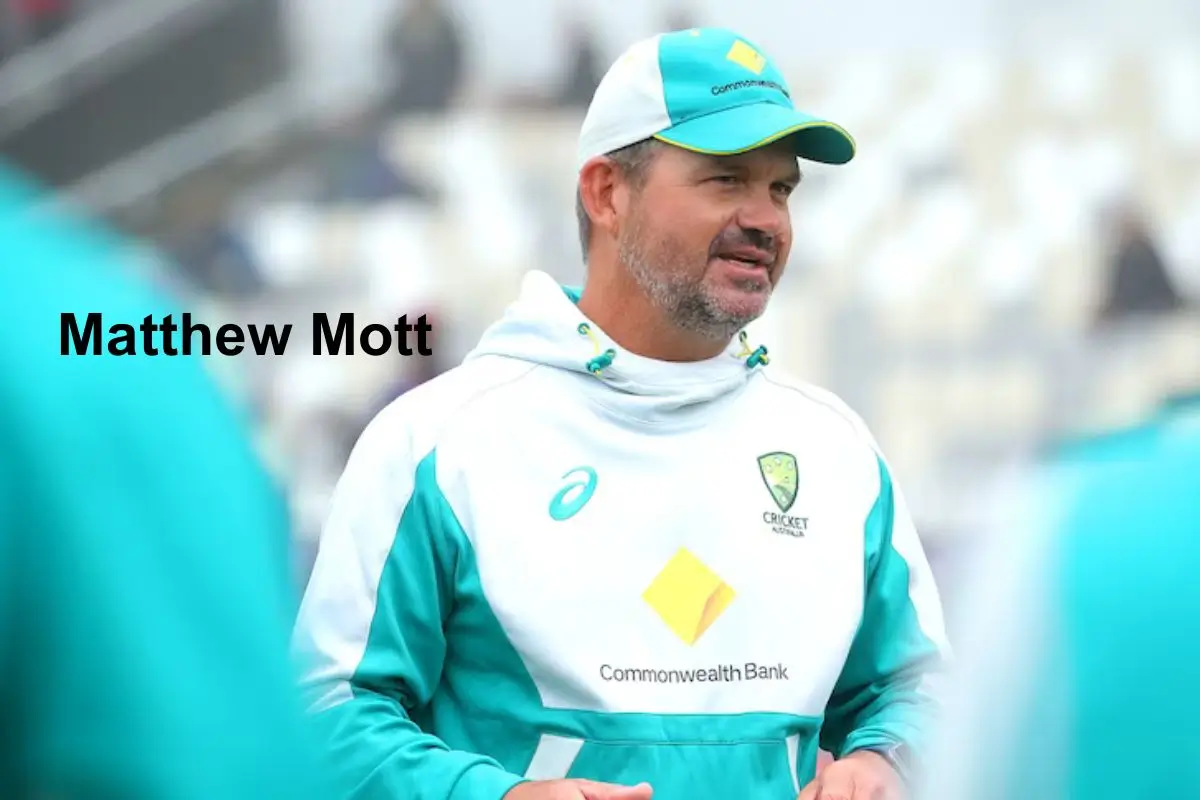
Matthew Peter Mott has built one of the most fascinating coaching careers in world cricket. His name rarely appears in headlines for the sake of noise, yet his influence stretches across continents, formats and generations of players. From his childhood in Charleville to World Cup triumphs, from headline-grabbing controversies around his England departure to his steady return to Australian cricket, Mott’s journey combines achievement, resilience, reinvention and a deep loyalty to the sport. This long-form biography brings together every confirmed detail of his life and career, integrating his early years, playing journey, coaching evolution, personal life, public comments, international roles, franchise work and long-term legacy.
Early life & family background
Matthew Mott was born on 3 October 1973 in Charleville, a small rural town in south-west Queensland. Growing up in a regional community shaped the rhythm of his childhood and eventually the guiding principles of his career. Charleville was the sort of place where families gathered for sport, where communities supported one another and where life moved at a steady pace. It was an environment that nurtured patience, cooperation and humility all qualities that would become essential to his coaching identity years later.
Mott’s family encouraged his participation in sport and supported the challenges that came with living far from elite pathways. Although he has chosen to keep specific family details private, he often refers to his upbringing as a grounding influence. His calm disposition and measured approach to leadership reflect the values of regional Queensland life. Cricket was central to his early years and quickly grew from a pastime into a passion. Local games, school cricket and backyard matches gave him endless opportunities to build his skills and develop his natural feel for the sport.
Early cricket development and the Australian Cricket Academy
From a young age, Mott displayed a sharp cricketing mind. Coaches noticed that he approached the game with curiosity and instinct, learning not only how to play shots but also how to understand the flow of a match. His ability to read situations, anticipate momentum swings and adjust his technique stood out. These traits would later become essential tools in his coaching work.
His talent and steady rise earned him a place at the Australian Cricket Academy in Adelaide in 1995. The Academy was a breeding ground for future state and national players. It provided world-class training, structured development systems and exposure to high-performance standards. Mott’s experience there sharpened his skills, strengthened his technical base and introduced him to professional training environments. It was during this phase that he began absorbing systems and methods he would eventually apply as a coach.
Playing career in Queensland and Victoria
Mott made his first-class debut for Queensland during the 1994–95 season. A left-handed top-order batsman, he was known for his patience, discipline and ability to occupy the crease. He was the type of player coaches appreciated: reliable, technically stable and aware of match contexts. Although his early seasons included periods in and out of the team, he delivered important contributions, including a notable knock of 86 in the 1996–97 Sheffield Shield Final.
Seeking more regular playing time, he moved to Victoria for the 1998–99 season. This decision reshaped his playing career. His first season with Victoria included centuries against New South Wales and Western Australia, cementing his place in the upper order. The following summer he produced 841 first-class runs, helping Victoria reach their first Sheffield Shield final in almost ten years. His partnership of 223 runs with Jason Arnberger remains a highlight of his Victorian tenure and is still remembered by supporters of the state.
When he retired from first-class cricket in 2004, Mott had played 66 matches, scoring 3723 runs at an average of 33.84, including seven hundreds. Although he never represented Australia at international level, his domestic career demonstrated consistency, technical competence and a deep understanding of the game qualities that quietly positioned him for coaching.
Early coaching path and rise with New South Wales
After retiring, Mott moved naturally into coaching. His ability to analyse players, communicate clearly and understand team dynamics made him a standout candidate for early development roles. He began working within the New South Wales system and soon became assistant coach before being promoted to head coach for the 2007–08 season.
His first year in charge produced immediate success, with the Blues winning the Pura Cup. This achievement established him as a promising new coaching voice. In 2009, NSW claimed the Champions League T20 title, a landmark victory that enhanced Mott’s reputation further. Players appreciated his calm guidance, structured preparation and willingness to listen. Those early years were crucial in forming the coaching style that would later define him globally.
Glamorgan appointment and English county experience
In January 2011, Mott accepted a three-year contract to coach Glamorgan in Wales. County cricket presented a different challenge: long seasons, varied conditions and squads featuring both veteran professionals and rising prospects. Mott approached the role with the same composure he had shown in Australia. In 2013, he guided Glamorgan to the Yorkshire Bank 40 final, one of their best campaigns in years.
Although the team fell short in the final, Mott’s influence reshaped the club’s systems. His commitment to development, communication and preparation continued to be recognised even after his departure at the end of the 2013 season.
Appointment as Australia Women’s head coach
In 2015, Cricket Australia appointed Matthew Mott as head coach of the women’s national team, marking the beginning of a dominant era. Under his leadership, Australia won the 2018 and 2020 T20 World Cups and the 2022 ODI World Cup. The team also recorded an extraordinary 26 consecutive ODI wins, setting a world record.
Mott’s coaching approach centred on trust, clarity and role definition. He worked closely with captain Meg Lanning and senior players including Ellyse Perry, Alyssa Healy and Rachael Haynes. His leadership encouraged transparency and open communication. Players thrived in an environment where their input mattered, and they understood their responsibilities clearly. His calmness during high-pressure stages of tournaments became a signature trait.
This period cemented Mott’s status as one of the most successful coaches in Australian cricket history.
Appointment as England men’s white-ball coach
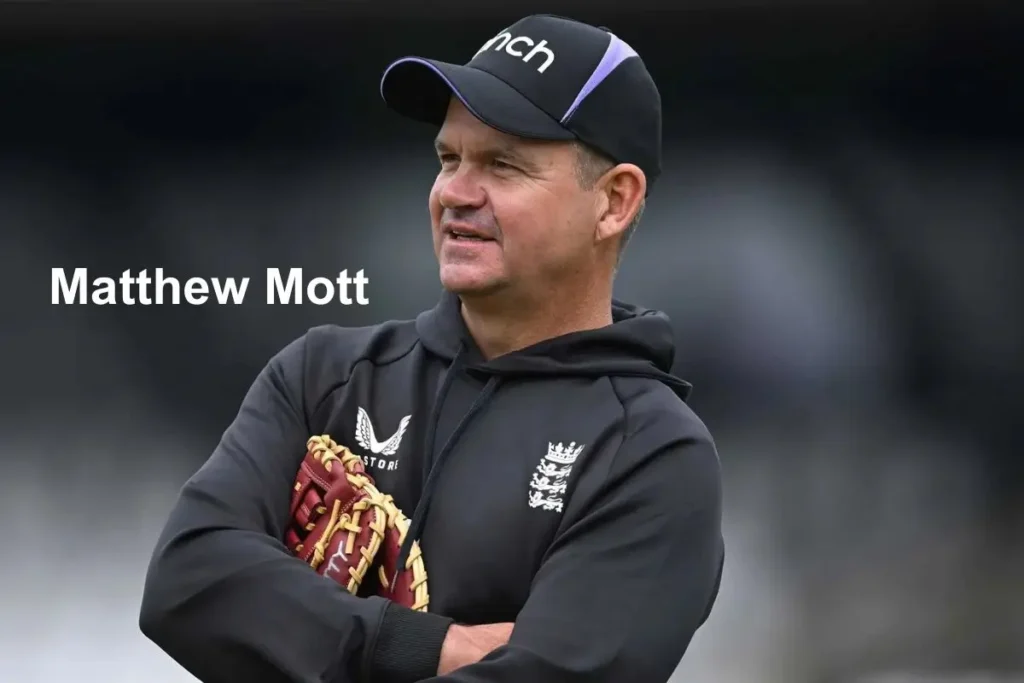
In May 2022, the ECB appointed Mott as head coach of England’s men’s white-ball teams. His arrival coincided with England’s mission to sustain the aggressive, modern style that had turned them into a major white-ball force since 2015. His partnership with captain Jos Buttler produced immediate success when England won the 2022 T20 World Cup, defeating Pakistan in the final at the MCG.
However, momentum shifted in the following seasons. England struggled during the 2023 ODI World Cup in India, with form issues, injuries and inconsistent performances affecting their campaign. Their run in the 2024 T20 World Cup ended before the final, adding further scrutiny.
Media coverage and departure from England
On 30 July 2024, Mott left his position. Coverage surrounding his departure varied significantly. Some outlets reported that he had stepped down voluntarily, while others including The Times and The Guardian stated that he had been sacked following England’s white-ball decline.
The ECB placed Marcus Trescothick in temporary charge, while Brendon McCullum, already head coach of England’s Test team, was formally given additional oversight of the white-ball setup. This shift was described by some as part of a broader restructuring effort, while others saw it as a response to the disappointments of the previous tournaments.
Through the uncertainty, Mott handled the situation professionally and avoided public criticism of players or administrators.
Move to franchise leagues including IPL and MLC
Following his England departure, Mott became increasingly involved in franchise cricket. He accepted a role as assistant coach with Delhi Capitals in the Indian Premier League. This position allowed him to work closely with one of the IPL’s most recognisable franchises.
He also joined the Seattle Orcas in Major League Cricket. The Orcas are part-owned by the GMR Group, who co-own the Delhi Capitals. This connection helped create a natural coaching pathway between the two teams. Mott’s involvement in the fast-growing American league added another layer to his global coaching footprint.
Return to Sydney Sixers Women’s team
In 2025, the Sydney Sixers announced that Mott would take over as head coach of their WBBL side, marking his return to women’s cricket. The previous coach, Charlotte Edwards, had stepped down to accept the England Women’s head coach role. Mott signed a two-year contract.
General manager Rachael Haynes praised his leadership, saying he brings a strong culture and world-class approach to team development. She added that his track record speaks for itself and that the club was eager to welcome someone of his calibre. Mott stated that he was delighted to return to the Sixers program, adding that it was a place that held strong connections from earlier in his career. He expressed excitement at reconnecting with players he had coached previously and working with emerging talent as they push for another title. The Sixers last won the WBBL in the 2017–18 season, giving Mott a clear challenge.
Sydney Sixers Men and BBL|14 assistant coaching role
In addition to leading the WBBL team, Mott also joined the men’s program as assistant coach under Greg Shipperd for the BBL|14 seasons. This dual involvement brought him back to the club where he began his coaching journey in the late 2000s. Mott explained that the opportunity to work with Shippers was appealing due to the respect he holds for him. The role also connected him with a high-performing group, adding another dimension to his coaching responsibilities in Sydney.
Mentoring coaches in Australia’s U19 women’s program
Mott also took on a mentoring role with the coaching staff of Australia’s U19 women’s side, supporting their tri-series with New Zealand and Sri Lanka in Queensland. His involvement focused on guiding coaches, strengthening pathways and helping develop the next generation of Australian women’s cricket.
Return to Glamorgan in a development role
In 2025, Glamorgan announced that Mott would return in a part-time role focused on coach development. Director of Cricket Mark Wallace stated that Mott would work with coaches across all levels of the club, from the professional squad to the pathway programs. Wallace explained that Mott’s experience would be central to improving coaching practices and enhancing talent identification.
This appointment highlights the respect Mott continues to command internationally and the value placed on his leadership philosophy.
Coaching style and leadership philosophy
Matthew Mott’s coaching style blends structure, communication and trust. He values clear role definition, steady preparation and environments where players feel comfortable expressing themselves. He uses analytics as support rather than as a replacement for intuition. His calm presence, especially during tense match situations, has been praised consistently by players.
Whether coaching international teams or franchise squads, he maintains a people-centred approach. His leadership encourages responsibility, collaboration and a shared understanding of goals.
Personal life and family
Mott is married and has children. Although he keeps his personal life private, he has mentioned the difficulties of long periods away from home during international tours and the importance of his family’s support. Their encouragement has allowed him to accept coaching opportunities in Australia, England, Wales, India and the United States. His family remains a steadying influence as he navigates a global coaching career.
Net worth estimate
While Mott has never publicly discussed his personal finances, industry estimates suggest that coaches with long careers across international teams, domestic competitions and major franchise leagues typically earn between AUD 350,000 and 900,000 annually, depending on roles. Considering his long coaching history, global appointments and IPL and MLC involvement, his estimated net worth is in the range of AUD 3 to 5 million.
Legacy and long-term influence
Matthew Mott’s legacy is embedded in every team he has shaped. His leadership of Australia Women created one of the most dominant eras in cricket history. His time with England delivered a World Cup win. His involvement in the IPL, MLC, WBBL and BBL reflects his adaptability in the modern game. His work with Glamorgan and Australia’s U19 pathways influences the future of the sport.
Above all, Mott is respected for the way he leads: with calmness, intelligence and genuine care for his players. His coaching journey shows that success does not require volume or ego, but clarity, preparation and connection.
Conclusion
Matthew Mott’s journey from a Queensland country town to the highest levels of world cricket is a story built on patience, commitment and an instinctive understanding of people. He has shaped teams across formats and continents, guiding some to historic success while steering others through challenging transitions. Whether leading Australia’s dominant women’s side, navigating the pressures of England’s white-ball program, or returning to the Sydney Sixers with renewed purpose, Mott has always carried the same calm and grounded presence that defined his early years. His influence now stretches well beyond match results, visible in the players he has mentored, the coaches he supports and the systems he continues to build. As he enters the next stage of his career, Matthew Mott remains one of Australian cricket’s most respected minds, and his legacy will continue to grow through every team and program he helps shape.
FAQs
What happened to Matthew Mott?
Matthew Mott’s most recent major role was as England’s men’s white-ball head coach. He led them to the 2022 T20 World Cup title but, after England’s poor 2023 ODI World Cup campaign and another disappointing T20 World Cup in 2024, he left the job in July 2024. Since then, he has moved back into franchise and domestic roles, including coaching in the IPL, Major League Cricket and returning to the Sydney Sixers setup.
Who is Matthew Mott in the IPL?
Matthew Mott has worked in the IPL as an assistant coach with the Delhi Capitals. In that role he helps with strategy, preparation, player development and opposition analysis, bringing his international coaching experience into a high-intensity T20 environment.
Who does Matthew Mott coach now?
Matthew Mott is involved in several roles. He has signed on as head coach of the Sydney Sixers women’s team in the WBBL, is an assistant coach with the Sydney Sixers men’s side in the BBL, has worked with Delhi Capitals in the IPL, and also holds a coach-development role with Glamorgan in county cricket. He continues to be heavily involved in both women’s and men’s cricket.
Who is Matt Mott?
Matt Mott, full name Matthew Peter Mott, is an Australian cricket coach and former first-class batter. Born in Charleville, Queensland, he played for Queensland and Victoria before moving into coaching. He is best known for coaching Australia’s women’s team during their era of dominance and later serving as England’s men’s white-ball head coach.
What is the controversy of Muralitharan?
The controversy around Muttiah Muralitharan, the Sri Lankan spin legend, centred on his bowling action. In the 1990s and early 2000s, some umpires and commentators questioned whether his unusual wrist-spin action amounted to “throwing” rather than a legal delivery. After biomechanical testing and changes to the ICC’s laws regarding elbow flex, his action was cleared and he went on to become the leading wicket-taker in international cricket.
Who is the 43-year-old player in the IPL?
Different seasons feature different veterans, but in recent years players such as MS Dhoni, Imran Tahir and others have continued playing into their late 30s and early 40s. The specific 43-year-old in the IPL depends on the season you’re referring to, as squad lists change every year.
Why is Anil Chaudhary not umpiring?
If Anil Chaudhary is not seen umpiring in a particular IPL, international series or tournament, it can be due to rotation, selection decisions, domestic commitments, fitness, or panel appointments rather than any permanent removal. Umpires are assigned series by their boards and the ICC, so absences are usually logistical rather than disciplinary unless officially announced.
Who is the new kid in the IPL?
Every IPL season throws up a “new kid” – a breakout young player who impresses with bat, ball or all-round performances. It might be a young Indian domestic star or an uncapped overseas player. The identity of the latest new kid changes from season to season, depending on who grabs their opportunity.