
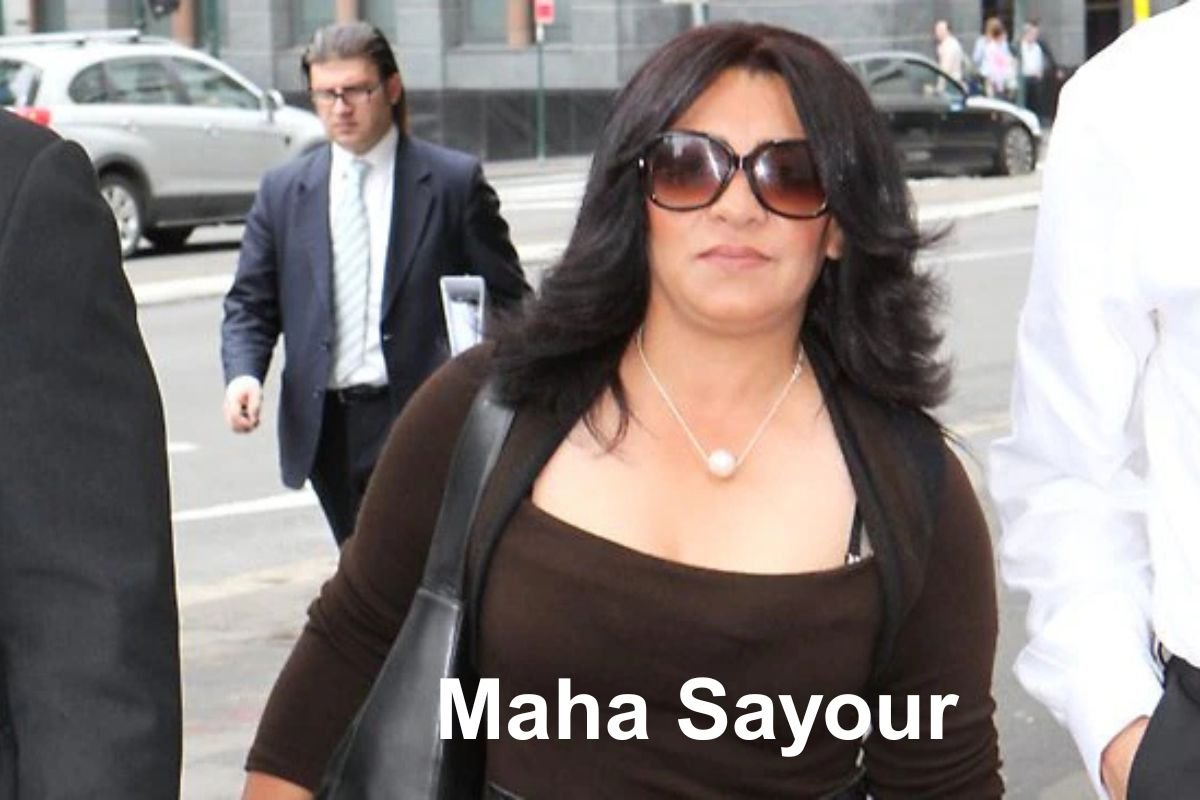
The legal history of Jazz Dior reads like two separate crime stories tied together by one name. From a ceiling cavity stuffed with vacuum-sealed cash to transcripts of coded phone calls about Glock pistols, her journey through the NSW court system reveals how suspicion, forensic evidence and recorded conversations can lead to very different outcomes. Dior, formerly known as Maha Sayour, faced police raids at her South Wentworthville home, undercover operations at a Warilla car wash and courtrooms filled with judges, lawyers and hidden details. Her cases show how one person can stand at the centre of two high-profile investigations and still receive two very different verdicts.
Family Name and Public Reporting
Jazz Dior, formerly known as Maha Sayour, came into public attention through two major NSW criminal cases that unfolded across eight years. Her connection to well-known figures in Sydney amplified scrutiny. She is the sister of Kings Cross identity John Ibrahim and former Nomads bikie leader Sam Ibrahim. Journalists including Candace Sutton reported on her sentencing, and images credited to Brendan Esposito and John Grainger captured Dior arriving at court in stilettos, heavy makeup and braided long hair. Dior legally changed her name in 2013, but both criminal matters remained connected to her former name.
The First Police Raid: Walk-In Wardrobe Discovery
The first case began in March 2009 when NSW Police executed a search warrant at Dior’s South Wentworthville home. Officers discovered $3,800 in a heat-sealed plastic bag in her wardrobe. She told police that her brother John gave her $500 a week to assist with mortgage repayments. Dior told officers she had been renovating the house “for several years” and that she kept “one kitchen for looking and one kitchen for cooking,” a comment later published as “Quote of the Week.” She purchased the two-storey house in 1991 for $159,950 and remained its sole adult occupant, although builders and other adults had access during the renovation period.
Second Raid: Cash in the Ceiling
Police returned to the property on 29 April 2009 and used a cable with a camera attached to inspect cavities. They removed a kitchen cupboard panel and found ninety-five vacuum-sealed plastic bags containing approximately $2.86 million in Australian currency hidden behind a wall. In total, thirteen finger and palm prints were recovered, but none belonged to Dior. More importantly, police could not prove who left the 13 finger and palm prints found on the plastic money bags, creating an evidentiary problem. The similarity between this stash and the smaller bag discovered in March was noted, but inference could not replace proof.
Legal Proceedings: Judge John North Reviews Months of Evidence
The matter came before NSW District Court Judge John North on Monday 12 December 2011. It was heard without a jury. Search warrant DVDs showing officers searching the home were played to the court. Judge North observed that over two separate visits, police spent around eight or nine hours in total inside the house and Dior did not alter her demeanor during that time. He described her as “a quite bubbly, effervescent personality,” adding, “I cannot rule out the possibility that she is a consummate actress. However, I also cannot rule out that she was guileless and endeavouring to make the best of a difficult situation.”
The Crown argued that Dior was recklessly dealing with the proceeds of crime. Judge North examined whether Dior’s conduct suggested knowledge of the hidden cash. He wrote that if Dior knew the money was there, she would have been “playing a dangerous game” by leaving it in place after police first attended in March 2009. Crucially, there was no forensic evidence attached to Ms Sayour. “Not even the gravest suspicion will suffice as proof beyond reasonable doubt,” Judge North stated. “He stressed the Crown had to prove her guilt, while Ms Sayour was not required to establish her innocence.” He said the money must have been hidden during building works, meaning “the possibility remains that other people may have been responsible.”
Dior was acquitted of two counts of recklessly dealing with the proceeds of crime relating to the cash found in March and April 2009.
The Firearms Case Emerges in 2014
While Dior avoided conviction in the cash case, her legal story took a different turn in 2014. Between January and March that year, NSW Police launched an undercover operation into illegal firearms supply. Investigators used listening devices, controlled buys and wiretaps to monitor communication linked to gun sales at the Clear View Hand Car Wash in Warilla, south of Sydney, a business Dior operated with her former partner, Elvis Mileski.
Investigators Trace Firearms Through Coded Conversations
NSW Police relied heavily on intercepted phone calls to map out how the firearms deals were organised. Rather than using explicit language, the participants spoke in coded terms like “brand new things, in the boxes” and referred to gun prices as “five and a half.” One phone intercept captured a discussion about needing “another twenty-three grand,” while another included the warning not to use personal vehicles when collecting items. These recordings showed investigators a complete narrative: the negotiation of prices, the planning of pick-ups, and the attempt to disguise the nature of the items being traded. The transcripts ultimately revealed a coordinated effort to supply firearms through a suburban business, with participants taking risks and using everyday language to hide criminal intent.
Judicial Reasoning Highlights the Limits of Suspicion in NSW
In the cash-ceiling case, Judge John North made it clear that suspicion alone cannot justify a conviction in a criminal court. He reviewed hours of search footage and emphasised that the key element missing from the prosecution was proof of knowledge. While the discovery of ninety-five vacuum-sealed bags of currency raised obvious concerns, there was no forensic evidence linking Maha Sayour to the stash. The judge noted that police could not prove who left the thirteen finger and palm prints on the bags, which seriously weakened the Crown’s argument. His decision demonstrated how NSW courts must base their findings on evidence rather than assumption, reinforcing the principle that every defendant must be judged according to proof beyond reasonable doubt.
Wiretap Conversations Capture Pricing, Supply and Risk

Phone intercepts captured detailed discussions about gun prices and logistics. In one February 2014 recording, Mileski told Dior he needed “another twenty-three grand” on top of “ten thousand” already prepared to buy “six brand new things, in the boxes.” He said each firearm would cost “five and a half,” and that he had “knocked off 15K on the deal.” In another intercept, he said, “We’ll sell them for whatever you want. Either he’ll give us something or just put f—ing 6½ on them.” He also mentioned hiring a car to avoid using his or Dior’s vehicle to pick up items.
One recorded conversation between an undercover police officer and Paul DeMarco included a direct question: “Are they from your mate Sam?” DeMarco replied, “Yep, but don’t say anything.” When supply delays occurred, DeMarco said, “I just spoke to him about twenty minutes ago … and I’m gonna meet him over at my mate’s place to find out what’s goin’ on,” before adding, “What do I say today if it’s not here? I’ll say, “Sam, you’re making me look like a f—ing idiot.”
Another phone intercept captured Sam Ibrahim saying to Dior, “You know how you told me about that thing before … get the lot … tell them, tell them we’ll buy all of it … ‘cause you know what? You can use them for your car wash.” The language linked Dior and Mileski directly to their brother’s participation in the purchase and distribution of firearms.
The Weapons Plot Unravels in a Controlled Glock Sale
According to Candace Sutton’s sentencing report, “the weapons plot unraveled when DeMarco tried to sell a box of Glock pistols” to an undercover police officer. That controlled sale provided police with direct evidence. Following the transaction, police executed raids at DeMarco’s home in Windsor and at the Clear View Hand Car Wash in Warilla, south of Sydney. They seized eighteen weapons including an M1 military-grade assault rifle, a standard rifle, three pistols, two shotguns and eleven handguns, along with a large quantity of ammunition.
During court submissions, DeMarco’s wife testified in court that he had become “grey, bloated, dishevelled” from ice addiction. The testimony highlighted DeMarco’s deteriorating personal circumstances as he became involved in the conspiracy.
Sentencing Before Judge Robert Toner
The former couple, Dior and Mileski, pleaded guilty to conspiring to unlawfully supply firearms from their suburban car wash business. On Thursday 3 August 2017, they arrived for sentencing in the NSW District Court before Judge Robert Toner. Picture: Brendan Esposito. Dior, accompanied by her lawyer Abbas Soukie, appeared in heavy makeup, five-inch heels and braids. Picture: John Grainger. Dior and Mileski very briefly acknowledged each other in the dock.
Judge Toner sentenced Dior to eighteen months served as a community based prison term through an Intensive Corrections Order. Under ICO conditions, offenders must comply with supervision, reporting, curfews and program participation, and face full-time custody if they breach terms. Mileski received the same sentence on identical conditions. Former Rose Tattoo drummer Paul DeMarco was sentenced to twelve years in prison, and is serving a minimum six years in prison for gun supply. Sam Ibrahim pleaded guilty and was due to be sentenced in September.
Two Cases, Two Outcomes, One Principle
The difference between Dior’s two legal outcomes highlights the decisive role of evidence in NSW courts. In the first matter, without forensic evidence tying her to the concealed funds, and because police could not prove who left the 13 finger and palm prints, Dior walked free. In the second matter, intercepted calls, undercover work, pricing negotiations and the attempted Glock sale produced direct proof of criminal intent. Recorded conversations with explicit references to gun costs and code language provided an evidentiary chain that supported guilty pleas.
Conclusion
The legal journey of Maha Sayour shows how two very different investigations can produce two entirely different outcomes in NSW courts. In one matter, suspicion surrounding hidden ceiling cash could not replace the need for forensic proof, and without evidence tying her to the vacuum-sealed bags, she was acquitted. In the later firearms case, undercover work, phone intercepts and seized weapons created a clear chain of evidence that led to guilty pleas and sentencing. Together, these cases highlight that criminal responsibility in Australia depends not on family notoriety or rumour, but on what can be presented, tested and proven in court.
FAQs
What clubs did John Ibrahim own?
John Ibrahim is most closely associated with several Kings Cross nightspots over the years including Trademark Hotel, Tunnel, Sapphire Lounge, and The Lincoln. He became known as a key nightlife operator in Sydney during the peak of the Kings Cross club era.
What is Australia’s most famous pub?
The Hotel Esplanade in St Kilda, commonly known as “The Espy,” is often described as Australia’s most famous pub. It has hosted live music for decades and remains a cultural landmark in Melbourne.
Why don’t Gen Z go clubbing?
Gen Z nightlife habits have shifted due to rising costs, safety concerns, later licensing hours for alternative events, and a preference for social media, gaming, festivals and smaller bar spaces over traditional club environments.
How true is the Last King of the Cross?
Last King of the Cross is based on John Ibrahim’s memoir. It blends real events, personal experiences and dramatic elements. While much of the story reflects life in Kings Cross nightlife, some scenes and characters are stylised for television.
What is the largest nightclub in the world?
Privilege in Ibiza, Spain, is widely recognised as the largest nightclub in the world. It has a capacity of around 10,000 people and hosts major EDM and festival-style events.
What is the oldest nightclub in the world?
The Cave Club in South Africa is often considered the world’s oldest continually operating nightclub, dating back to the early 1960s. It was built inside an actual cave and became a historic live-music venue.
Does Club 77 have an entry fee?
Yes. Club 77 in Sydney typically charges an entry fee, although pricing varies depending on the night, guest DJs and special events. Some midweek nights may offer cheaper or discounted entry.
What is the biggest bar in Australia?
The Pub in Alice Springs is regularly cited as one of the biggest bars in Australia due to its massive floor space, outdoor areas and live event capacity. It often hosts touring bands, football screenings and large weekend crowds.