
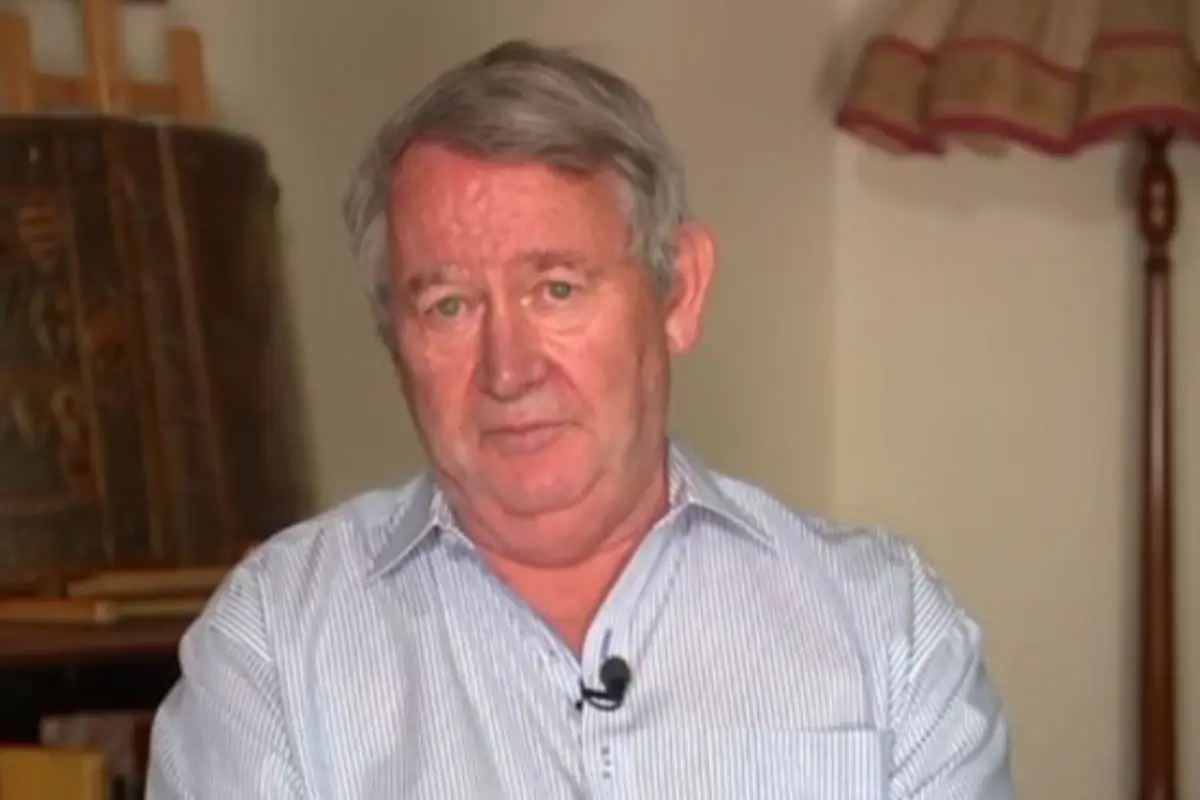
Greg Craven is an Australian academic and former vice-chancellor of the Australian Catholic University. Over more than four decades, he has developed a career centred on constitutional law, university governance, Catholic intellectual life and public debate about campus policy, higher education priorities, discrimination and academic responsibility. His writing, commentary and administrative experience have involved advisory work in government, leadership roles in universities and contributions to discussions on constitutional history, student welfare, curriculum direction and national policy change. This profile examines his early life, legal scholarship, management approach, media presence and current involvement in assessing how Australian universities address antisemitism.
Early Life and Family Background
Gregory Joseph Craven was born in Melbourne in 1958. Information about his parents and family background beyond their religious and cultural identity is limited in public reporting, but he was raised in an Irish-Catholic household where education, reading and moral formation shaped his early outlook. His brother, Peter Craven, became a respected literary critic in Australia, publishing essays and reviews across major newspapers and journals. Growing up in this environment meant encountering discussions about books, art, language and ideas, which influenced Greg’s sense of inquiry and intellectual discipline.
Craven attended St Kevin’s College in Toorak, a school known for academic expectations and Catholic character. He showed an early preference for humanities subjects, particularly history and government. Teachers noted his interest in structured reasoning, debate and the interpretation of text, traits that would later guide his study of law and public policy. Melbourne in the 1970s offered exposure to national political change, constitutional arguments and growing discussion about Australia’s identity, placing Craven’s youthful academic interests in a wider cultural context.
University Education and Legal Interests
Craven studied at the University of Melbourne, completing a Bachelor of Arts in 1980, a Bachelor of Laws in 1981 and a Master of Laws in 1984. His postgraduate research work focused on constitutional law, federation and judicial interpretation. During this period, political attention in Australia was turning toward questions of nationhood and constitutional reform, including discussions that eventually formed part of the 1999 referendum debate. Legal scholarship around these issues emphasised interpretation of foundational texts, the history of federation and the scope of the High Court’s authority. Craven became interested in how constitutions form national identity and how judicial systems determine the limits of power.
His formal study developed an approach based on historical grounding, legal clarity and structured argument. Rather than separating law from culture, Craven viewed legal systems as expressions of collective decision-making. Ideas around constitutional structure and federal balance would remain central to his publications and later public writing.
Professional Philosophy on Higher Education
Greg Craven has consistently argued that universities must balance intellectual rigour with public responsibility. His commentary emphasises that tertiary institutions should not be shaped solely by market demands or financial pressures. He has said in interviews that academic culture depends on respectful disagreement rather than conformity or ideological enforcement. Throughout his writing, Craven has expressed the view that institutions need to remain committed to their founding purpose even when managing structural and budget decisions.
Craven’s approach to university leadership focused on supporting programs in teacher development, nursing and health sciences as well as humanities disciplines connected to Catholic identity. He encouraged the thinking that universities serve a community role beyond career training. His work at ACU included extension of professional partnerships with hospitals, schools and social service providers, demonstrating belief that higher education should support workforce needs while sustaining a core academic mission.
Early Teaching Career and Academic Work
Craven began teaching law at Monash University in 1982. Colleagues characterised his teaching style as analytical and historically based, favouring careful explanation of core legal principles. Students were encouraged to consider law as a system that develops through precedent, political change and public demand. Craven taught with focus on interpretation of primary legal documents and the need for students to trace reasoning through cases instead of relying on summaries.
Between 1982 and 1985, he developed a foundation in academic research, speaking at conferences and contributing to university discussions on legal curriculum and governance. He published early papers that considered federal issues, constitutional drafting and the development of public law in Australia.
Government Work and Crown Counsel Role
In 1985, Craven entered government service as Director of Research for the Legal and Constitutional Committee of the Victorian Parliament. The role required producing reports, analysing legal questions arising from proposed legislation and assisting parliamentary study of constitutional matters. This exposure to real policy work broadened his understanding of how legal interpretation functions within administrative systems.
In 1992, he was appointed Crown Counsel to the Victorian Government, a senior legal advisory role supporting ministers and departments. He served in this position until 1995. Work as Crown Counsel involved guiding government understanding of constitutional and public law issues, including state responsibilities and relations with the Commonwealth. Practical decision-making in government settings confirmed Craven’s interest in how legal interpretation affects policy, resource allocation and public institutions.
After concluding the role, Craven resumed academic work at the University of Melbourne as Reader in Law, allowing him to continue research and teaching while drawing on practical legal experience gained from government service.
Publications and Constitutional Scholarship
Craven has written multiple books on constitutional subjects. Each publication explores legal interpretation, historical design and questions of authority in Australian public life, while also engaging with broader themes of national identity and institutional responsibility.
His first major book, Secession: The Ultimate States’ Right (1986), considers the possibility of secession within a federation and examines historical and theoretical arguments surrounding state autonomy and withdrawal. Australian Federation: Towards the Second Century (1992) evaluates constitutional developments from the early twentieth century to the modern period and raises questions about structural reform. The High Court of Australia: A Study in the Abuse of Power (1997) criticises trends in judicial activism, arguing that some High Court decisions stretched constitutional meaning beyond original frameworks. Conversations with the Constitution (2004) is a widely cited text offering detailed analysis of interpretation, constitutional narrative and public understanding.
These works helped position Craven as a prominent voice in debates around the 1999 referendum on whether Australia should become a republic. His arguments often emphasised caution in altering constitutional arrangements, insisting on clarity of design and protection of institutional relationships within the federation. He expressed concern that proposed changes might weaken accountability or introduce ambiguity in constitutional language.
Craven has continued to write articles, opinion pieces and scholarly essays on constitutional issues and political history. His writing style is known for direct argument, historical references and emphasis on institutional memory.
University Leadership and Strategic Duties
Craven took on several senior roles in university administration, gaining experience in planning, research strategy and academic management. He became Foundation Dean and Professor of Law at the University of Notre Dame Australia, helping to build a law school focused on rigorous study and Catholic identity. He later moved to Curtin University of Technology in Western Australia, where he served as Deputy Vice-Chancellor (Strategy & Planning) and Executive Director of the John Curtin Institute of Public Policy. These roles involved guiding academic planning, program development, resource allocation and institutional direction.
In February 2008, Craven was appointed Vice-Chancellor and President of Australian Catholic University (ACU). His leadership sought to expand research, enhance student experience and strengthen programs in teaching, nursing, theology, philosophy, psychology and social work. He emphasised that ACU could improve academic capability without weakening religious identity. Under his administration, ACU opened additional facilities, extended campus operations in multiple cities and launched an international campus in Rome.
Institutional Challenges and Academic Discussion
ACU later faced difficult decisions regarding staffing and funding priorities, particularly in the humanities. Academic staff and researchers expressed concern over program changes and resource reductions. Letters were published by academics raising issues around philosophy and theology staffing as well as research support for institutes connected with religious and historical study. Administrators at ACU explained decisions in light of economic conditions, shifts in student demand and national changes to university funding arrangements. Debate at ACU reflected broader national conversation about the place of humanities fields in modern higher education and the pressures facing universities across Australia.
Struggle Narrative: Balancing Values and Practical Decisions
One of the continuing challenges in Craven’s career involved balancing educational identity with organisational responsibility. Admiring traditions of Catholic scholarship and philosophy, he also faced realistic considerations around financial management, enrolment numbers and government support. He often addressed questions about how universities could maintain values while adapting to changing expectations. Public criticism of program decisions and debates around resource cuts exposed the tension between mission and management, a tension many Australian universities have encountered in recent years.
Awards, Honours and Recognition
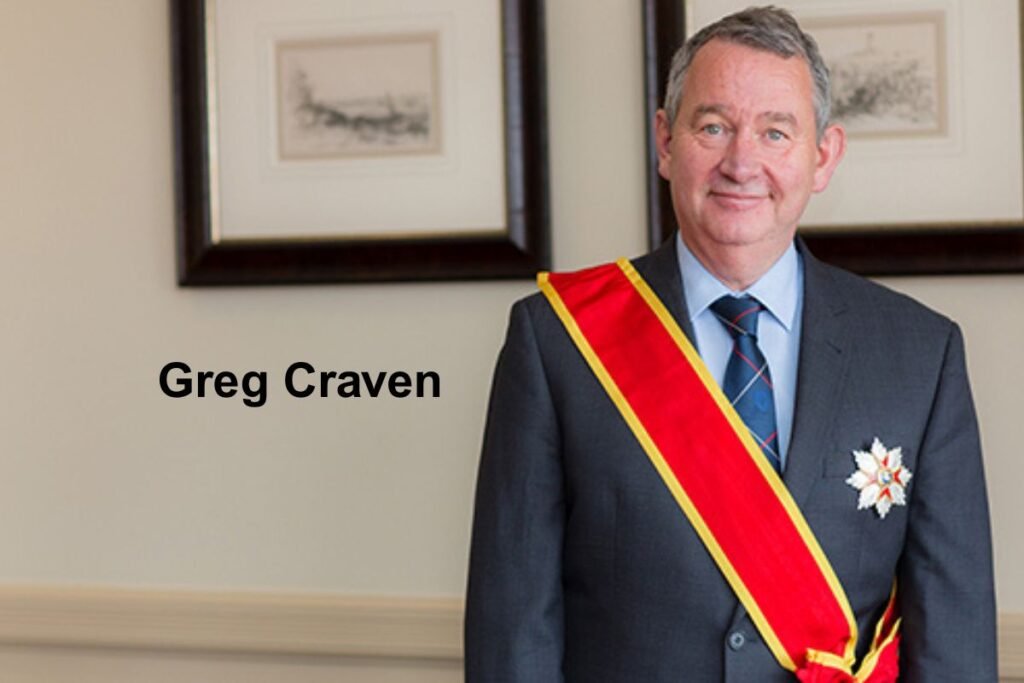
Craven was appointed Knight Grand Cross of the Order of St Gregory the Great by Pope Francis in 2015. In January 2017, he was appointed Officer of the Order of Australia for distinguished service to tertiary education and constitutional scholarship. Both honours acknowledge his contributions to university leadership, research development and involvement in education policy.
Family and Personal Life
Craven is married to Anne and they have four children: John, Catherine, Thomas and Patrick. He has an interest in rural life and manages cattle on a property in New South Wales. He follows major Australian sports and values privacy in family matters. Personal aspects of his life do not feature heavily in media or academic reporting, leaving professional achievements as the primary source of public information.
Governance and Advisory Work in Education
Craven has not pursued corporate business roles. His involvement with organisational leadership has taken place within advisory boards and education councils. His work as Deputy Chairman of the COAG Reform Council and involvement in the National Catholic Education Commission placed him in positions reviewing policy, advising on school systems and contributing to national strategies in education. He also served in national higher-education bodies where discussions included industrial relations, data analysis, planning and policy direction across the university sector.
Work in these roles involved tasks common to business leadership such as long-term planning, coordination across multiple institutions, budget discussion, workforce matters and research oversight. Through multiple committee positions and advisory appointments, Craven contributed to national dialogue on education systems, institutional development and teaching standards.
Media Commentary and Public Discussion
Craven has written columns for The Australian and contributed articles to Catholic publications. He has also appeared in media interviews on legal and constitutional questions, including commentary on referendum debates, government policy and the role of universities in shaping civic values. Broadcast media coverage has included discussions on constitutional reform, public institutions, freedom of speech and educational leadership. He has said that universities “must be places where curiosity is encouraged, but where discrimination is addressed decisively” — a statement that reflects his interest in protecting both inquiry and dignity.
His writing and commentary present legal and educational issues in a way intended to be understandable to general readers, emphasising the importance of clear reasoning and historical grounding. Media involvement has placed him in national debates around cultural identity, religion, legislation and university responsibilities.
Appointment to Examine Antisemitism in Universities
In 2025, Craven was appointed to examine how Australian universities respond to antisemitism. The appointment came after research commissioned by Australia’s Special Envoy to Combat Antisemitism, Jillian Segal. The research included a survey of 2,185 non-Jewish adults that gathered information on public attitudes toward Jewish communities, government policies and perceptions of discrimination.
Survey analyses showed that younger adults and university students had higher antizionist views than graduates or older respondents, with many respondents distinguishing between criticism of foreign government actions and attitudes toward Jewish populations. Craven said that antisemitism “undermines student welfare and weakens academic culture.”
His role involves examining university policies, complaints procedures, student conduct rules and definitions based on widely used anti-discrimination frameworks, including definitions developed by the International Holocaust Remembrance Alliance. The IHRA definition states that antisemitism involves hostility, prejudice or discrimination directed at Jewish people because of identity, heritage or culture. It also recognises that criticism of governments is not inherently antisemitic unless it is directed at Jewish people as a group.
Craven intends to produce evaluations of policies across Australian universities before the 2026 academic year, providing ratings and recommendations on procedures used to prevent harassment, intimidation and discriminatory behaviour on campus.
Discussions around his appointment have included concerns raised by student advocacy groups and staff unions about ensuring freedom of speech while addressing harmful conduct, as well as support from organisations concerned about student safety and transparency in campus policies.
Public Speaking and Academic Addresses
Craven has presented lectures and participated in conferences across Australia on topics including constitutional history, education strategy, religious identity and governance. His speeches often focus on the relationship between institutional values and decision-making in an environment of rapid social change. He has spoken at events hosted by universities, Catholic education bodies and legal organisations, contributing to continuing discussions about civic duties, campus culture and national legal history.
Name Similarities and Search Results
Search results for Greg Craven have included unrelated individuals, such as dental professionals in Canada, medical researchers associated with institutions in the United States and bakery listings in the United Kingdom. These separate individuals share similar names but have no connection to Greg Craven the academic described in this article.
Timeline Overview
1982 — Teaching begins at Monash University
1985 — Director of Research, Victorian Parliament Committee
1992–1995 — Crown Counsel to the Victorian Government
1996–2002 — Foundation Dean and Professor of Law, University of Notre Dame Australia
2002–2008 — Deputy Vice-Chancellor (Strategy & Planning), Curtin University
2008–2021 — Vice-Chancellor, Australian Catholic University
2015 — Knight Grand Cross of the Order of St Gregory the Great
2017 — Officer of the Order of Australia
2025 — Appointment to assess antisemitism policies in Australian universities
Public Policy Influence and National Legal Commentary
In addition to university management, Craven has contributed to national policy debate through published opinions and media involvement. He has been interviewed about constitutional issues on radio and television and has written commentary on topics including High Court decisions, separation of powers, Indigenous recognition, and questions surrounding legal structure. At different times, he has expressed concerns about judicial activism, arguing that law should develop through constitutional clarity and historical understanding rather than judicial expansion of meaning.
Craven’s commentary conveys interest in the tension between democratic authority and constitutional framework. Rather than advocating constant reform, he has often suggested that lasting legal structures provide stability. His contributions have appeared in public discussions around head of state reform proposals, state–Commonwealth divisions and disputes concerning legislative authority. These interventions place Craven among academics who bridge the gap between scholarship and public understanding of legal governance.
Continuing Engagement in Catholic Intellectual Tradition
Throughout his career, Craven has maintained involvement in Catholic education and intellectual life. His publications frequently reflect interest in the role of religious institutions in shaping ethical outlook and learning environments. He has participated in Catholic panels, academic boards and education committees where discussion includes the integration of faith, ethics and research in Australian scholastic contexts.
Craven has spoken about Catholic identity as a guiding principle for educational institutions that emerged from religious initiative. His writing acknowledges the influence of Catholic history in universities and schools which have pursued both spiritual formation and academic achievement. Across conference papers and teaching materials, Craven highlights the ongoing importance of Catholic reasoning in contemporary educational debates involving community values, philosophical study and cultural participation.
Conclusion
Greg Craven’s life and career show a sustained commitment to constitutional scholarship, higher-education leadership and public engagement with complex questions about institutions, values and civic duty. His work reflects interest in legal clarity, educational direction and the standards that shape public life. From his early years in Melbourne to leadership roles in university management and his current involvement in examining antisemitism in higher education, Craven has participated in national conversations about student wellbeing, curriculum priorities, discrimination, responsible debate and regulatory policy. His contributions remain part of ongoing discussions about the development and direction of Australian education, law and democratic culture.
FAQs
Who is Greg Craven?
Greg Craven is an Australian academic known for his work in constitutional law and university leadership. He served as vice-chancellor of the Australian Catholic University and has written extensively on legal interpretation and public policy.
What roles has Greg Craven held in higher education?
Craven has held senior leadership positions including Foundation Dean of Law at the University of Notre Dame Australia, Deputy Vice-Chancellor at Curtin University and Vice-Chancellor of Australian Catholic University from 2008 to 2021.
What subjects has Greg Craven written about?
His published work includes books and articles on constitutional law, the High Court of Australia, federation, governance and issues related to Catholic education and university identity.
What awards has Greg Craven received?
Craven was appointed Knight Grand Cross of the Order of St Gregory the Great in 2015 and was made an Officer of the Order of Australia in 2017 for his contributions to tertiary education and constitutional scholarship.
What is Greg Craven’s academic background?
He studied at the University of Melbourne, earning bachelor’s degrees in arts and law and completing a Master of Laws with a focus on constitutional issues and federal governance.
What is his current involvement in public debate?
Craven continues to comment on legal and education matters and has been appointed to examine how Australian universities respond to antisemitism, including policy frameworks and student welfare issues.
Has Greg Craven worked in government?
He served as Crown Counsel to the Victorian Government from 1992 to 1995 and worked as Director of Research for a parliamentary legal and constitutional committee.
Does Greg Craven hold business positions?
Craven has not been associated with private business ventures. His leadership roles have been in education governance, including advisory positions in national organisations focused on university planning, school policy and sector management.