The criminal case involving Gavin Morris Alice Springs has become one of the most consequential education-related prosecutions in the Northern Territory in recent years. It exposed failures not only in individual conduct, but also in recruitment, governance, oversight and institutional accountability within an independent Indigenous school system already under strain. The case affected children, families, staff and an entire school community, while prompting broader scrutiny of how authority is exercised in Australian education.
Gavin Morris, a former NRL referee, academic and school principal, was convicted of aggravated assault offences after physically abusing Indigenous students at Yipirinya School. The court proceedings, sentencing remarks and subsequent collapse of confidence in the school revealed a convergence of leadership failure and systemic weakness, leaving lasting damage that extended far beyond the courtroom.
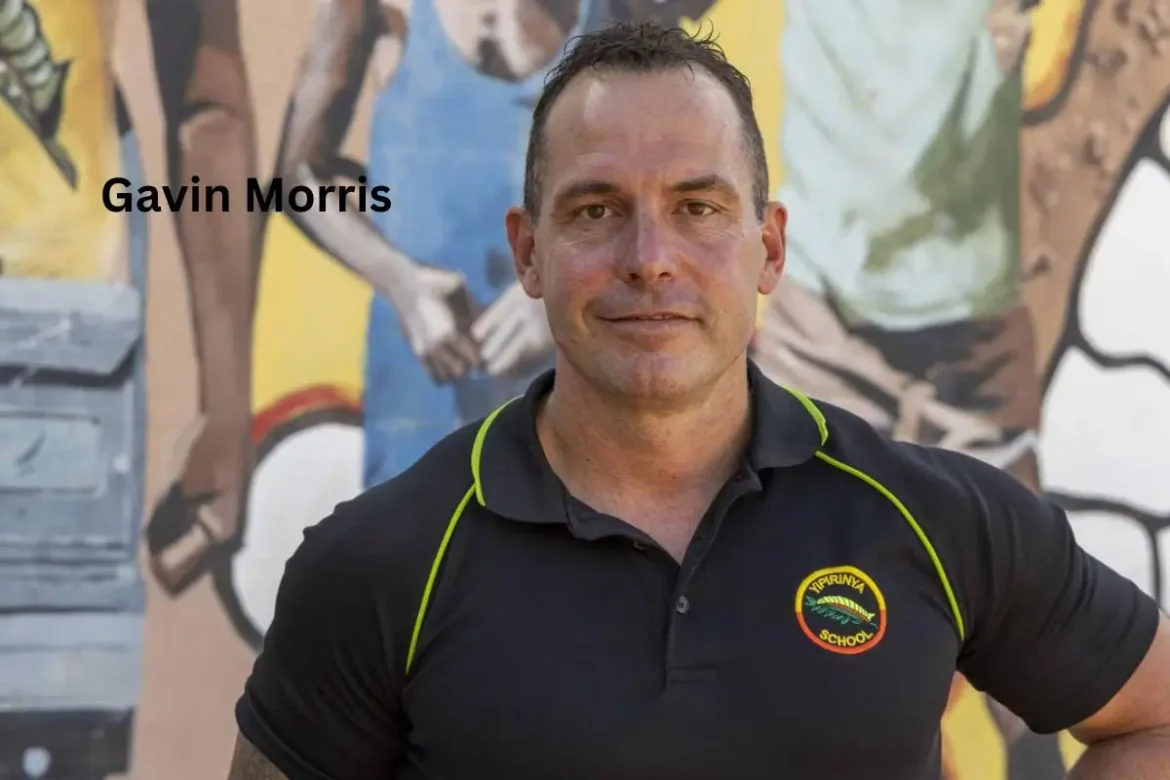
Gavin Morris and His Public Profile
Before his appointment at Yipirinya School, Gavin Morris had a public and professional profile that set him apart from many school leaders. At the time of sentencing, Morris was 47 years old. He was known nationally as a former National Rugby League referee, having officiated 98 NRL games between 2010 and 2015, including two finals matches. This background was repeatedly referenced in media reporting, framing the case as one involving a person accustomed to authority and control who later abused that authority over children.
Academically, Morris completed a Doctorate in Anthropology in 2020. He later lectured at Charles Darwin University, and his professional profile listed involvement in educational boards and advisory councils. On paper, his academic credentials suggested expertise in social and cultural contexts, particularly relevant to Indigenous education.
What later emerged, however, was that Morris had never previously held the role of school principal prior to his appointment at Yipirinya. This absence of prior leadership experience in a school environment became a central issue once the case unfolded.
Yipirinya School’s Historical Role and Cultural Importance
Yipirinya School was established in 1978 as an independent Indigenous school in Alice Springs. Its founding purpose was to provide Aboriginal children with access to education grounded in culture, language and community involvement. For decades, the school held symbolic and practical importance as a culturally specific alternative to mainstream education systems.
The school’s mission made governance stability and ethical leadership particularly critical. Families entrusted Yipirinya with not only their children’s education but also their safety and cultural wellbeing. Any failure in leadership therefore carried consequences far beyond administrative inconvenience.
The School’s Declining Stability Before Morris’s Appointment
By the time Morris was appointed principal in 2022, Yipirinya School was already facing serious difficulties. Enrolments had been declining for years, falling from a peak of around 360 students to approximately 50. Financial pressures intensified, with the school recording a $3.7 million deficit.
Staff redundancies followed, placing additional stress on remaining teachers and administrators. The school’s financial instability meant leadership decisions were scrutinised closely, and the margin for error was minimal. This fragile context magnified the impact of Morris’s conduct once allegations emerged.
The Appointment Process and Early Warning Signs
The process that led to Morris’s appointment became a focal point of later scrutiny. In 2021, the Northern Territory Department of Education appointed a selection panel to choose a new principal for Yipirinya School. Documents later tabled in parliament revealed that the panel relied on two referee reports, neither of which came from individuals who had worked with Morris in a school leadership context.
One referee was a university colleague, the other an Indigenous community leader. While both spoke positively about Morris’s leadership qualities, neither provided examples of him acting as a school principal. Despite this, the selection report stated that Morris had held leadership positions in Indigenous schools and demonstrated leadership inside and outside education.
Fiona McLoughlin, a teacher with more than forty years’ experience who had served as interim principal at Yipirinya from 2020 to 2021, applied for the role and was unsuccessful. She later stated that Morris’s leadership experience in schools was effectively non-existent and said he had never been principal of any school, let alone one as complex as Yipirinya.
Employment History and Unaddressed Complaints

Further concerns emerged regarding Morris’s employment history at St Francis Xavier School in Daly River, where he worked from 2016 to 2018. His roles there were limited to PE teacher and Student Behaviour and Well-Being Coordinator.
His line manager, Fran Enilane, later confirmed Morris did not hold senior leadership responsibilities and that his contract was not renewed beyond the probationary period. She stated she was never contacted for a reference during the Yipirinya selection process and expressed surprise at his appointment as principal.
An email sent by independent consultant Nicole Travers to a Department of Education official shortly after the selection report was finalised raised further concerns. Travers referred to information she described as alarming, including a complaint involving harassment and bullying. Former teaching assistant Marese Peachy later corroborated claims of bullying directed at both staff and children. The complaint was withdrawn when Morris left the school.
There is no suggestion the selection panel was aware of these issues at the time of appointment. A department official later stated the process was final, and the department did not respond to repeated requests for comment.
Emergence of Assault Allegations
Reports of Morris physically assaulting students emerged in 2023, less than a year after his appointment. The allegations involved Indigenous boys aged between eight and thirteen and triggered a police investigation.
The reported incidents occurred during Morris’s tenure as principal and involved the use of physical force against students in various school settings. These allegations marked a turning point, shifting the school from administrative instability into criminal scrutiny.
The Criminal Charges
Following the investigation, Morris was charged with five counts of aggravated assault. The charges alleged that Morris used unlawful force against students while acting in a position of authority.
The seriousness of the charges reflected not only the physical acts themselves but also the vulnerability of the children involved and the breach of trust inherent in a principal-student relationship.
Court Proceedings in Alice Springs
The case was heard in the Alice Springs Local Court during 2025, presided over by Judge Anthony Hopkins. Morris pleaded not guilty to all charges.
The trial examined each incident in detail, with the court considering witness testimony, the context of each alleged assault and the power imbalance between Morris and the students. Central to the court’s analysis was whether any of the conduct could be justified as reasonable discipline or self-defence.
Assaults Proven by the Court
The court found that Morris pulled a 12-year-old boy from a playground fight and placed him in a headlock, causing pain, restricting his breathing and making him feel afraid.
Morris was also found guilty of grabbing two young boys by their ears and twisting them painfully after they made a mess in a childcare centre.
Another conviction involved Morris choking a boy who had accessed a locked school hall with another student.
Morris was found not guilty of a fifth charge involving an alleged choking of an 11-year-old boy in a classroom. Student witnesses alleged Morris used racist language during that incident, but the court did not uphold the charge.
Verdict
In October 2025, Judge Hopkins found Morris guilty on four counts of aggravated assault and not guilty on one count. The judge ruled the conduct was excessive, unlawful and could not be justified under any lawful disciplinary framework.
The verdict affirmed that school principals are subject to the same criminal laws as all Australians and that physical force against children carries serious legal consequences.
Sentencing Hearing and Judicial Assessment
Sentencing took place on 11 December 2025. During the hearing, child impact statements were read to the court. These statements described pain, fear and ongoing emotional distress. One child recalled struggling to breathe during the assault.
Judge Hopkins stated Morris’s conduct reflected a sense of entitlement and a willingness to interfere with the safety of children entrusted to his care. Addressing Morris directly, the judge said his actions were a grave and serious breach of trust and that he had harmed children it was his duty to protect.
The judge noted Morris’s lack of remorse, his difficulty controlling anger when frustrated, and a willingness to sometimes act violently. He stated the offending harmed not only the children but also the wider community, which had a deep interest in protecting education pathways for Aboriginal students.
The Sentence
Morris was sentenced to 18 months’ imprisonment, fully suspended for two years, on the condition of good behaviour. Judge Hopkins explained that sending Morris to jail would be counterproductive, stating that full-time custody would do little to achieve specific deterrence or community protection and would undermine prospects of rehabilitation.
The judge also stated the conviction and suspended prison term would almost certainly end Morris’s teaching career and prevent him from working with children and young people.
Professional and Employment Consequences
Morris was dismissed from Yipirinya School before conviction, following the emergence of allegations. The court acknowledged that his conviction effectively ended his professional future in education.
Appeal
Morris has stated he will appeal against the guilty verdicts. The appeal process remains ongoing.
Impact on Yipirinya School
The consequences for Yipirinya School were severe. Enrolments continued to decline, staff redundancies increased and confidence in leadership collapsed. The school was placed under statutory management.
Within a short period, Yipirinya appointed three principals in less than a year. Greg Hollis, former head of Tiwi College, was appointed after Justin Colley was dismissed following disputes with the statutory manager.
Broader Implications
The Gavin Morris Alice Springs case raised serious questions about recruitment practices, due diligence and oversight in independent schools. It reinforced the legal limits of physical discipline and highlighted the risks faced by vulnerable students when governance systems fail.
Conclusion
The Gavin Morris Alice Springs case represents a profound failure of leadership and oversight within an education system entrusted with the care of Indigenous children. It exposed weaknesses in recruitment, governance and accountability, while causing lasting harm to students and a school community already under pressure.
While appeal proceedings continue, the convictions, judicial findings and institutional fallout remain. The case stands as a powerful reminder that authority in education carries legal, ethical and moral responsibilities that cannot be ignored.
FAQs
Who is Gavin Morris in Alice Springs?
Gavin Morris is a former school principal and ex-NRL referee who led Yipirinya School in Alice Springs and was later convicted of aggravated assault offences involving students.
What school was Gavin Morris principal of?
Gavin Morris was appointed principal of Yipirinya School, an independent Indigenous school in Alice Springs, in 2022.
What charges was Gavin Morris convicted of?
He was found guilty of four counts of aggravated assault involving Indigenous students aged between eight and thirteen, and found not guilty on one charge.
What did the court find Gavin Morris did to students?
The court found he placed a student in a headlock, twisted the ears of two boys, and choked another student in separate incidents while acting as principal.
What sentence did Gavin Morris receive?
He was sentenced to 18 months’ imprisonment, fully suspended for two years, on the condition of good behaviour.
Why was Gavin Morris not sent to jail?
The judge said sending him to prison would be counterproductive and would not achieve rehabilitation, specific deterrence or community protection.
What impact did the case have on Yipirinya School?
The case contributed to declining enrolments, staff redundancies and the school being placed under statutory management.
Is Gavin Morris appealing the court decision?
Yes, Gavin Morris has stated he will appeal against the guilty verdicts.