
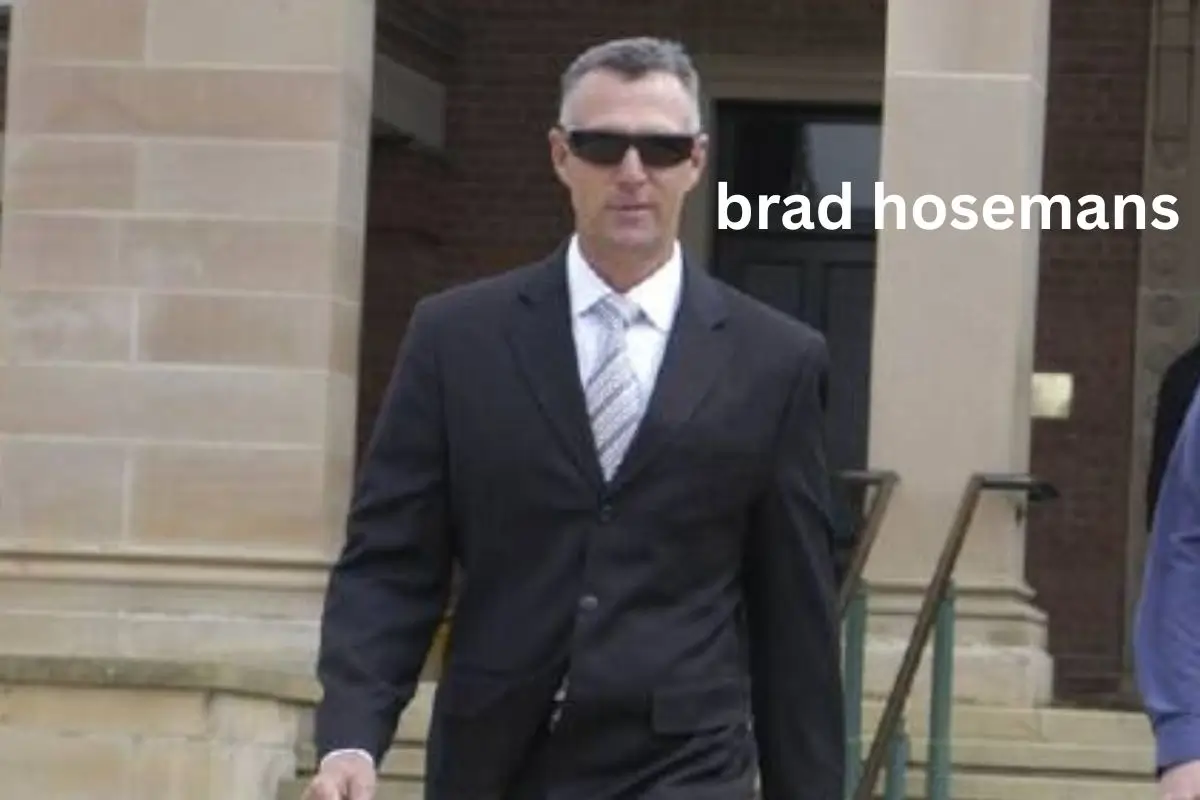
The name Brad Hosemans continues to surface in discussions surrounding one of Australia’s most unsettling unsolved criminal cases, the disappearance and suspected murder of Janine Vaughan in Bathurst, New South Wales. More than two decades have passed since Vaughan was last seen, yet the case remains open and unresolved, continuing to attract public attention, media investigation, and institutional review.
Brad Hosemans’ connection to the case exists not because of any criminal conviction or charge, but because of his professional position at the time of Vaughan’s disappearance and the scrutiny that followed when the police investigation itself became the subject of integrity and coronial examination. His name has become part of the historical record of the case, making it essential to distinguish clearly between investigative responsibility, oversight review, and criminal liability.
This article presents a detailed, factual, investigation-focused account of Brad Hosemans, his role in the Janine Vaughan case, the police and integrity inquiries that followed, the findings of oversight bodies, and the reasons his name remains associated with an unsolved homicide.
The background of the Janine Vaughan case
Janine Vaughan was 31 years old when she disappeared in the early hours of 7 December 2001 in Bathurst, a regional city in central New South Wales. On the night of her disappearance, Vaughan had been socialising at the Metro Tavern, a venue that, during the late 1990s and early 2000s, was known locally for heavy drinking, late trading, and incidents of violence.
In the early morning hours, CCTV cameras outside the tavern captured Vaughan on Keppel Street in rainy conditions. Shortly before 3:50 am, the footage shows her entering a red car. This remains the last confirmed sighting of her.
From that moment onward, Vaughan vanished. She did not return home, contact friends or family, access bank accounts, or use her phone. There was no evidence to suggest she had planned to leave town or disappear voluntarily. Her sudden absence raised immediate concern, and what began as a missing persons inquiry soon escalated into a serious criminal investigation.
Over time, authorities concluded that Janine Vaughan did not simply go missing, but that she had died as the result of a criminal act.
Who Brad Hosemans was at the time
At the time of Vaughan’s disappearance, Bradley George Hosemans was a serving Detective Sergeant with the NSW Police Force, stationed at the Chifley Local Area Command in Bathurst. He held a senior investigative role and was involved in overseeing serious crime investigations within the local command.
In addition to his policing duties, Hosemans also held a public role in local government, serving as Deputy Mayor of Bathurst. While this dual role was lawful, it later became relevant during integrity reviews due to concerns about public confidence, transparency, and governance when the police investigation came under scrutiny.
These overlapping responsibilities placed Brad Hosemans in a position of authority and visibility when Janine Vaughan disappeared.
The initial police investigation
Brad Hosemans was initially placed in charge of the investigation into Vaughan’s disappearance. During the early stages, police assessed CCTV footage, interviewed witnesses, and attempted to trace Vaughan’s movements after she left the Metro Tavern.
As is common in missing person cases, early assumptions influenced how the investigation progressed. At the time, there was limited understanding of what had occurred after Vaughan entered the red car, and investigators faced challenges including limited eyewitness accounts and a lack of forensic evidence.
As days turned into weeks with no sign of Vaughan, the investigation intensified. However, concerns began to emerge about how certain investigative steps were handled, particularly during the crucial early period when evidence and witness recollections are typically strongest.
Emergence of investigative concerns
As the case progressed, criticism grew regarding the handling of the investigation. These concerns included allegations of missed opportunities, delays in pursuing certain lines of inquiry, and weaknesses in investigative oversight.
It is important to note that later reviews concluded these shortcomings were not the result of a single decision or individual, but rather reflected broader systemic issues within the investigation. These issues included management practices, allocation of resources, and the overall structure of investigative decision-making.
Public concern, combined with the seriousness of the case, eventually led to independent oversight.
Oversight and Police Integrity Commission involvement
Due to mounting concerns about police conduct, the investigation into Janine Vaughan’s disappearance was examined by the NSW Police Integrity Commission (PIC). One of the major inquiries conducted by the PIC was known as Operation Rani.
The purpose of Operation Rani was not to identify who killed Janine Vaughan, but to examine whether police officers involved in the investigation acted appropriately, whether conflicts of interest existed, and whether investigative failures compromised the case.
Because Brad Hosemans had been the officer in charge during the early stages, his conduct, decisions, and professional circumstances were examined as part of this broader review.
This scrutiny was institutional and administrative in nature. It was focused on how the investigation was managed, not on proving criminal guilt.
Understanding the term “person of interest”
During the integrity review process, Brad Hosemans was described as a person of interest. In Australian policing and legal contexts, this term does not equate to being charged with a crime or formally accused.
A person of interest is someone whose actions, role, or proximity to events warrant examination to ensure all relevant issues have been considered. In Hosemans’ case, this status arose due to his leadership position and involvement in the investigation, not because of evidence linking him to Vaughan’s disappearance.
This distinction is critical, as the term is often misunderstood in public discussion.
The anonymous letter and further investigation
In 2005, an anonymous letter was sent to the NSW Commissioner of Police alleging that Brad Hosemans was involved in Janine Vaughan’s disappearance. The letter did not result in charges or prosecution.
Instead, it prompted further scrutiny by integrity bodies, who assessed whether any evidence supported the allegations. These reviews examined the claims raised in the letter alongside existing evidence and investigative records.
Authorities ultimately found no reliable evidence to substantiate the allegations made in the anonymous correspondence.
Findings of the Police Integrity Commission
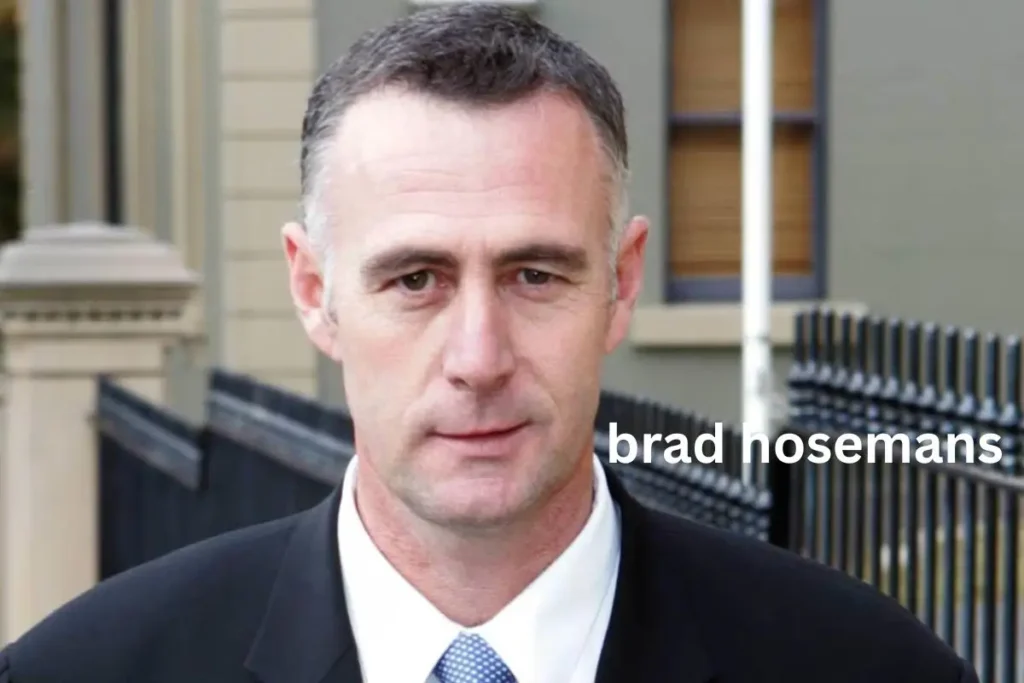
The findings of the Police Integrity Commission are among the most significant official conclusions relating to Brad Hosemans.
After examining evidence, reviewing police conduct, and assessing allegations, the Commission concluded that there was no reliable evidence linking Brad Hosemans to the disappearance or death of Janine Vaughan. The Commission explicitly stated that prosecution should not be pursued against him in relation to the case.
This conclusion represents the most authoritative independent assessment of his involvement and remains central to any factual account of the matter.
Dismissal from NSW Police
Brad Hosemans was dismissed from the NSW Police Force in 2003. This fact is frequently mentioned in connection with the Vaughan case, often without proper context.
Official records clearly state that his dismissal was for matters unrelated to Janine Vaughan’s disappearance. There is no court ruling, charge, or official finding that links his dismissal to the case.
Misinterpretation of this fact has contributed to ongoing public confusion.
The coronial inquest and its implications
In 2009, a NSW Coronial Inquest examined the circumstances surrounding Janine Vaughan’s disappearance. The coroner found that Vaughan was deceased and that her death resulted from a criminal act by an unknown person.
Under Australian law, a coroner can make such a finding even when a body has not been recovered. However, a coroner does not have the power to charge or convict anyone. Responsibility for Vaughan’s death remained attributed to an unknown offender.
Bradley George Hosemans gave evidence during the inquest and denied having any contact with Janine Vaughan prior to her disappearance. The inquest did not make adverse findings against him in relation to responsibility for her death.
Media investigations and public perception
The Janine Vaughan case has been revisited by Australian media on numerous occasions, including through investigative television programs such as Under Investigation. These programs examined CCTV footage, the social environment in Bathurst at the time, and the failures of the early investigation.
Importantly, major Australian media outlets have reported that Brad Hosemans was cleared by police investigations. Despite this, unresolved cases often generate ongoing suspicion, and public perception can diverge from official findings.
Renewed police investigation and Strike Force Toko II
In 2013, NSW Police established Strike Force Toko II, led by the Unsolved Homicide Unit, to re-examine Janine Vaughan’s disappearance as a suspected murder. This renewed investigation involved re-interviewing witnesses, reassessing existing evidence, and pursuing new leads.
Despite these efforts, no arrests have been made and no charges have been laid.
Reward and current status of the case
The NSW Government has offered a $1 million reward for information leading to the arrest and conviction of those responsible for Janine Vaughan’s death. The reward reflects police belief that someone may still hold crucial information.
As of the most recent public records, Vaughan’s body has not been found, no person has been charged, and the case remains open.
Brad Hosemans, while historically linked to the investigation, is not a suspect, not charged, and not accused under Australian law.
Timeline of key events
- 7 December 2001: Janine Vaughan is last seen entering a red car outside the Metro Tavern in Bathurst
- December 2001: Brad Hosemans, a Detective Sergeant, is placed in charge of the initial investigation
- 2002: Hosemans becomes a person of interest during integrity reviews
- 2003: Hosemans is dismissed from NSW Police for unrelated matters
- 2005: An anonymous letter alleges his involvement, triggering further scrutiny
- 2009: Coronial inquest finds Vaughan died as a result of a criminal act by an unknown person
- 2009: Hosemans denies contact with Vaughan during inquest testimony
- 2013: Strike Force Toko II is established to re-investigate the case
- Ongoing: Authorities state no reliable evidence links Hosemans to the disappearance
Final assessment
The story of Brad Hosemans within the Janine Vaughan case is not one of conviction or criminal guilt. It is a story shaped by investigative responsibility, institutional oversight, and the lasting impact of an unsolved crime.
Official records, coronial findings, and independent integrity reviews all reach the same conclusion: while Brad Hosemans’ role in the early investigation warranted scrutiny, there is no reliable evidence connecting him to Janine Vaughan’s disappearance or death.
The unresolved loss of Janine Vaughan remains the central tragedy. Until the truth of what happened to her is uncovered, the case will continue to be examined and debated. In doing so, accuracy, fairness, and reliance on verified facts must remain essential.
FAQs
Who is Brad Hosemans?
Brad Hosemans, also known as Bradley George Hosemans, is a former NSW Police detective who was involved in the early investigation into the disappearance of Janine Vaughan in Bathurst in 2001.
What is Brad Hosemans’ connection to the Janine Vaughan case?
Brad Hosemans was initially placed in charge of the police investigation after Janine Vaughan went missing. His connection to the case is professional, not personal.
Was Brad Hosemans accused of murdering Janine Vaughan?
No. Brad Hosemans has never been charged, convicted, or formally accused of involvement in Janine Vaughan’s disappearance or death.
Why was Brad Hosemans investigated by integrity bodies?
He was scrutinised because of his senior role in the early investigation and concerns raised about how the case was handled, not because of evidence linking him to the crime.
What did the Police Integrity Commission find about Brad Hosemans?
The Police Integrity Commission found no reliable evidence linking Brad Hosemans to Janine Vaughan’s disappearance and stated that prosecution should not be pursued.
Why was Brad Hosemans dismissed from NSW Police?\
Brad Hosemans was dismissed from the NSW Police Force in 2003 for matters unrelated to the Janine Vaughan case, according to official records.
Did the coronial inquest implicate Brad Hosemans?
No. The 2009 coronial inquest found that Janine Vaughan died as a result of a criminal act by an unknown person and made no adverse findings against Brad Hosemans.
Is the Janine Vaughan case still open?
Yes. The case is officially classified as a suspected murder, remains unsolved, and is still under investigation by NSW Police.