
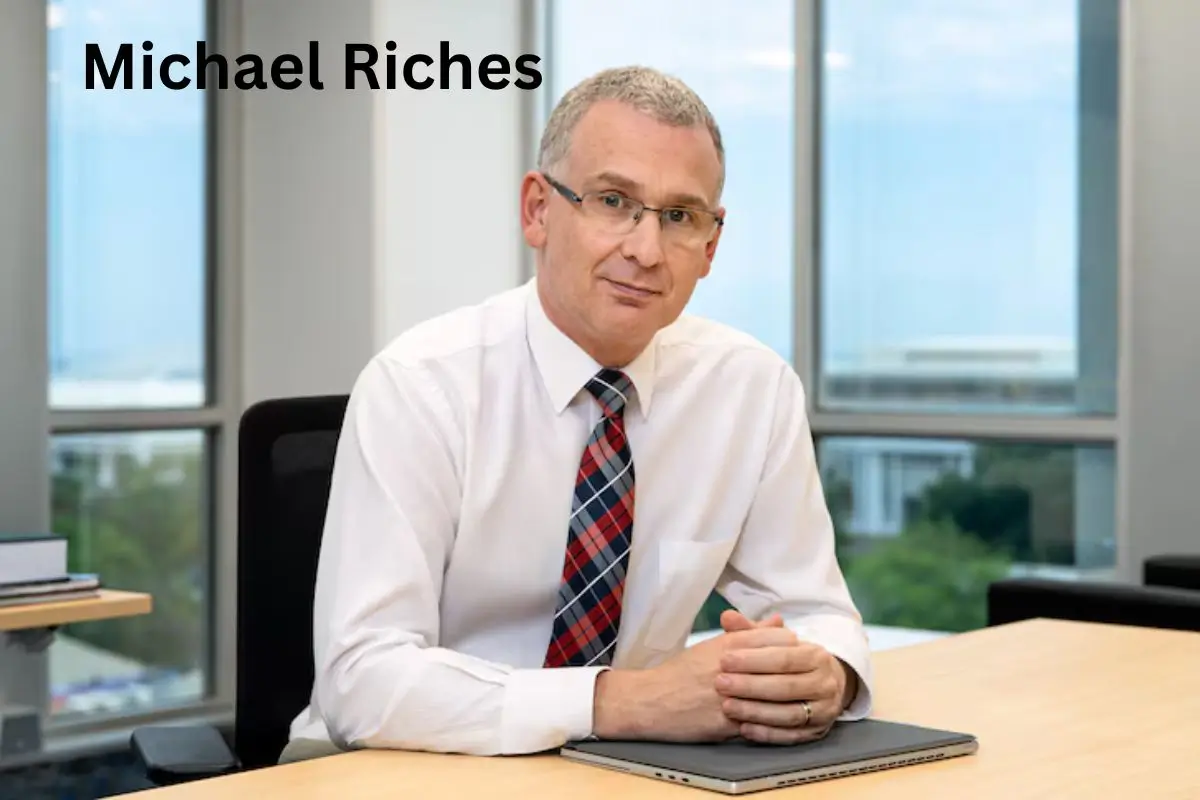
Michael Riches is an Australian public sector leader whose career has been shaped by law enforcement, government legal practice, public integrity reform, and statutory oversight. He is best known for his role as the Independent Commissioner Against Corruption for the Northern Territory, a position that places him at the centre of the Territory’s integrity and accountability framework.
Over the course of his professional life, Riches has progressed from frontline policing into senior legal advisory roles and ultimately into leadership within Australia’s integrity institutions. His career reflects sustained engagement with governance, regulation, and ethical administration across multiple levels of the public sector.
This article provides a complete and structured account of Michael Riches’ education, career, and statutory responsibilities, focusing on his professional journey and the institutional context in which he has operated.
Independent Commissioner Against Corruption for the Northern Territory
Michael Riches commenced as the Independent Commissioner Against Corruption of the Northern Territory on 6 July 2021. The Commissioner is an independent statutory office holder whose functions are established under the ICAC Act. The role is designed to operate independently of government and plays a central role in maintaining integrity across the Northern Territory public sector.
As Independent Commissioner Against Corruption, Riches is responsible for overseeing the Territory’s anti-corruption framework. This includes responsibility for addressing corruption risks, supporting ethical conduct, and ensuring accountability within public institutions. The position carries statutory authority and requires careful balance between investigative functions, procedural fairness, and institutional independence.
Scope and jurisdiction of the Northern Territory ICAC
The Northern Territory ICAC has jurisdiction across public sector bodies and officials within the Territory. This includes oversight of agencies, officers, and entities that fall within the public administration framework. The Commissioner’s role extends to matters concerning public sector conduct, governance systems, and integrity risks that may arise within government operations.
The breadth of this jurisdiction places the Commissioner in a position of significant responsibility, requiring oversight of integrity issues that affect a wide range of public functions and services.
Preventive and educational functions of the ICAC
In addition to addressing allegations and risks of corruption, the ICAC framework places emphasis on prevention and education. The Commissioner’s responsibilities include promoting integrity awareness and supporting measures designed to reduce the likelihood of misconduct within public institutions.
These functions recognise that effective anti-corruption systems rely not only on investigation but also on education, guidance, and institutional strengthening. Through this approach, the ICAC contributes to long-term improvements in public sector governance and ethical standards.
Leadership and organisational responsibilities
The role of Independent Commissioner Against Corruption involves both statutory and leadership responsibilities. Beyond the exercise of statutory functions, the Commissioner provides direction and leadership to the ICAC organisation itself. This includes oversight of governance arrangements, internal processes, and the effective operation of the office in accordance with legislative requirements.
This dual responsibility reflects the executive nature of the role, combining institutional leadership with independent statutory authority.
Independence and safeguards built into the ICAC role
The role of Independent Commissioner Against Corruption is structured to operate with a high degree of independence. The Commissioner exercises functions under legislation rather than direction from government or political office holders. This design is intended to protect the integrity of decision-making and ensure that corruption risks can be addressed without improper influence.
Independence is supported through statutory safeguards, defined powers, and formal reporting mechanisms. These arrangements are central to maintaining public confidence in the ICAC’s work and ensuring that integrity oversight is conducted impartially and consistently across the public sector.
Contribution to long-term integrity culture in the public sector
Beyond individual matters and oversight functions, the work of the ICAC contributes to the development of a long-term integrity culture within the public sector. Through guidance, engagement, and systemic focus, the Commissioner’s role supports improved awareness of ethical standards and governance responsibilities among public officers.
This broader contribution reflects an understanding that effective integrity systems depend on organisational culture as well as compliance. By supporting ethical decision-making and accountability frameworks, the ICAC’s work influences how public institutions approach risk, transparency, and responsibility over time.
Areas of professional expertise
Michael Riches’ professional expertise centres on regulation, governance, and integrity systems. His career demonstrates sustained involvement in frameworks designed to prevent misconduct, manage risk, and promote accountability within public institutions.
His experience spans operational policing, legal advisory work, institutional reform, and statutory leadership. These roles collectively reflect a professional focus on ethical administration and the effective functioning of integrity systems.
Academic qualifications and education
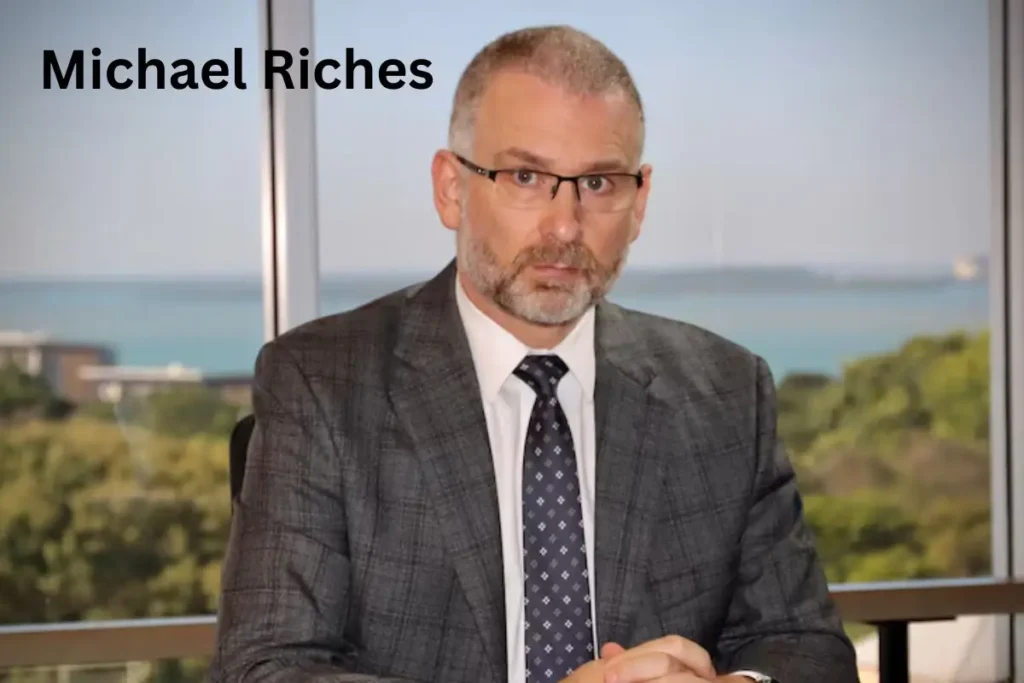
Michael Riches holds an Honours Degree in Law and Legal Practice from Flinders University in South Australia. In addition to his legal qualification, he holds a Degree in Arts and a Diploma in Public Safety.
These academic qualifications provided the foundation for a career combining law enforcement experience with legal and governance responsibilities. His education reflects a multidisciplinary background encompassing law, public administration, and operational understanding.
He is also undertaking a Master’s Degree in Corruption and Governance through the Centre for the Study of Corruption at the University of Sussex in England, reflecting continued engagement with academic study in integrity and governance.
Early career in policing
Before entering legal practice, Michael Riches spent almost nine years as a police officer with South Australia Police. During this period, he worked across a range of operational and corporate roles, including general policing duties, tactical teams, police communications, and media liaison.
This experience provided exposure to frontline law enforcement, operational decision-making, and public communication. It also contributed to an understanding of accountability and ethical conduct within policing environments, which later informed his work in legal and integrity oversight roles.
Legal work within policing environments
After completing his Law and Legal Practice Degree, Michael Riches worked as a solicitor in the Police Legal Branch. In this role, he provided legal advice supporting policing operations and governance, assisting with compliance, interpretation of legal obligations, and lawful decision-making.
This role represented a continuation of his engagement with law enforcement, combining practical operational knowledge with legal expertise.
Career at the Crown Solicitor’s Office
Michael Riches later joined the Crown Solicitor’s Office, where he worked in the Civil Litigation Section, the Advising Section, and as counsel in the Crown Counsel Section. His work involved advising state government agencies across a wide range of legal matters.
He appeared as counsel in multiple proceedings, including several high-profile coronial inquiries. These matters typically involve complex legal and factual issues and require careful consideration of public interest, accountability, and procedural fairness.
Contribution to legal education
Alongside his government legal roles, Michael Riches worked part-time as a tutor at the University of Adelaide Law School. In this capacity, he contributed to the education of law students, drawing on his experience in policing, litigation, and public sector legal practice.
This involvement reflects engagement with legal education and professional development within the legal community.
Role in public integrity reform in South Australia
Michael Riches was a member of the Public Integrity Reform team in South Australia and took a lead role in the establishment of the South Australian Office of the Independent Commissioner Against Corruption and the Office for Public Integrity.
The creation of these bodies represented a significant development in South Australia’s integrity framework. His involvement placed him at the centre of institutional design and implementation, contributing to the development of structures intended to strengthen accountability and ethical governance within the public sector.
Senior leadership within integrity institutions
Following the establishment of the integrity offices, Michael Riches held the position of Senior Legal Officer before being appointed Director of Legal Services and Reviews. These roles involved legal oversight, review functions, and support for the integrity bodies’ statutory responsibilities.
In December 2016, he was appointed Chief Executive Officer of the Independent Commissioner Against Corruption and the Office for Public Integrity in South Australia. As CEO, he was responsible for organisational leadership, operational management, and support for statutory office holders.
Deputy Independent Commissioner Against Corruption in South Australia
Michael Riches became the South Australian Deputy Independent Commissioner Against Corruption on 26 October 2018. This appointment reflected senior standing within the integrity system and involved assisting the Commissioner in fulfilling statutory responsibilities related to corruption prevention, investigation, and education.
National context of integrity commissions in Australia
The work of the Northern Territory ICAC exists within a broader national framework of integrity and anti-corruption bodies across Australia. While each jurisdiction operates under its own legislation, these institutions share common objectives related to accountability, ethical conduct, and public confidence in government.
Michael Riches’ career across South Australia and the Northern Territory places his work within this wider national integrity landscape, contributing to shared principles of governance and oversight.
Appointment to the Northern Territory ICAC
Michael Riches’ appointment as Independent Commissioner Against Corruption for the Northern Territory marked the continuation of a career focused on integrity leadership. Commencing on 6 July 2021, he assumed responsibility for leading the Territory’s anti-corruption framework under the ICAC Act.
The role requires balancing investigative authority, institutional leadership, and independence, while supporting effective governance across the public sector.
Professional standing and expert contribution
Michael Riches is recognised within professional and academic contexts as an experienced practitioner in regulation and integrity. His background combines policing, legal practice, institutional reform, and statutory leadership, providing a broad perspective on integrity systems and governance.
Conclusion
Michael Riches’ career reflects long-term involvement in Australia’s integrity and accountability landscape. From frontline policing to senior legal advisory roles and leadership within statutory integrity bodies, his professional path has been shaped by responsibilities that emphasise governance, regulation, and ethical administration.
His service as Independent Commissioner Against Corruption for the Northern Territory represents the culmination of decades of experience in law enforcement, public sector law, and integrity reform. While his professional contributions are well established through statutory appointments and leadership roles, his personal life remains outside the scope of professional disclosure, consistent with the nature of independent statutory office.
FAQs
Who is Michael Riches?
Michael Riches is an Australian public sector leader known for his work in law enforcement, government legal services, and public integrity. He served as the Independent Commissioner Against Corruption for the Northern Territory.
What is the role of the Independent Commissioner Against Corruption?
The Independent Commissioner Against Corruption is responsible for overseeing integrity systems within the public sector, addressing corruption risks, and supporting ethical conduct under the ICAC Act.
When did Michael Riches become the NT Independent Commissioner Against Corruption?
Michael Riches commenced as the Independent Commissioner Against Corruption of the Northern Territory on 6 July 2021.
What experience did Michael Riches have before becoming ICAC?
Before his appointment, Michael Riches worked in policing, government legal services, integrity reform, and senior leadership roles within South Australia’s integrity institutions.
Did Michael Riches work as a police officer?
Yes. Michael Riches spent almost nine years with South Australia Police, working in both operational and corporate roles.
What legal roles did Michael Riches hold?
Michael Riches worked as a solicitor in the Police Legal Branch and later at the Crown Solicitor’s Office, where he advised government agencies and appeared as counsel in coronial inquiries.
Is Michael Riches involved in any public controversies?
There is no information indicating involvement in personal legal cases or controversies. His public profile is focused on statutory roles and governance responsibilities.
Is Michael Riches the same person as the corporate executive with the same name?
No. Michael Riches, the Independent Commissioner Against Corruption, is a different individual from the Australian infrastructure executive who shares the same name.