
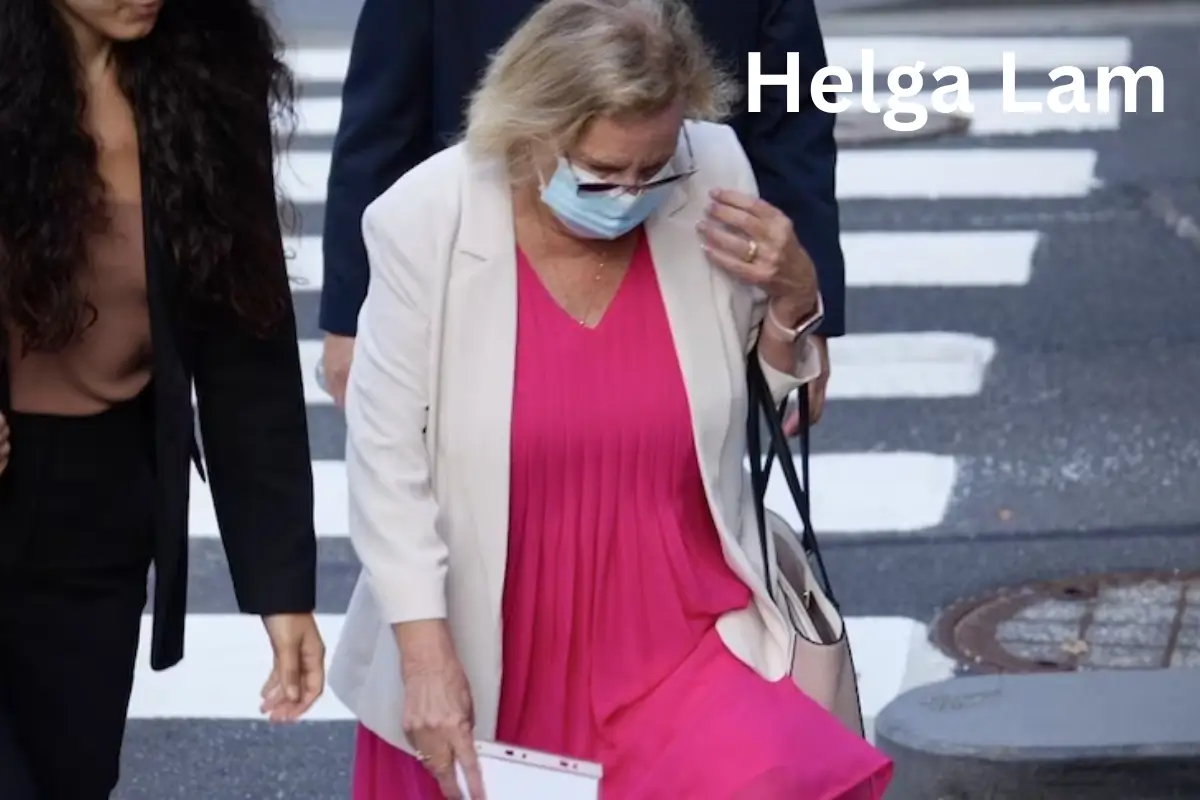
The interwoven legal narratives of former New South Wales educators Helga Lam and Gaye Grant have emerged as some of the most important illustrations of how out-of-date legislation, evolving societal norms, and contemporary court reasoning combine with past child sexual abuse instances. The legal developments in the two women’s cases converged in courtrooms about fifty years after the claimed incidents occurred, despite the fact that they were charged by separate former pupils and taught at different institutions. A convoluted series of police investigations, appeal decisions, historical legislative analysis, and civil processes followed, illustrating how challenging it may be for the legal system to decide cases involving activity that took place under a legal framework that is significantly different from the one in place now.
The police investigations, the legal arguments, the judicial remarks that were absent from previous versions of the story, and the full civil findings regarding Helga Lam—including the judge’s reasoning, the shortcomings of the then-principal of the school, and the courtroom interactions between the complainants and the barristers—are all detailed in this expanded account. Every detail is included to provide a comprehensive account of how these instances changed how Australian courts have interpreted past cases involving child sexual assault.
The Helga Lam Case and the Legal and Social Environment of the 1970s
Going back to the late 1970s, long before Australian society had the terminology or the collective consciousness to talk freely about child sexual assault, is necessary to comprehend the results in the Grant and Helga Lam instances. At the time, sexual behaviour involving boys was not consistently or protectively treated by New South Wales legislation. In 1910, the legal age of consent for females was sixteen. However, there was no uniform age of consent for boys. Rather, a collection of charges fashioned by antiquated ideas of “indecency” and “unnatural offences” applied to male victims.
For many years, “indecent assault on a male,” which is covered under section 81 of the Crimes Act 1900 (NSW), was the primary crime. The clause was originally intended to regulate male-to-male sexual activity, including consenting adult relationships, which were illegal until 1984. The clause expected a male complainant and a male perpetrator because to that background.
For many years, this gender-specific drafting was mostly disregarded. Without questioning whether section 81 extended to female offenders, prosecutors prosecuted both men and women. Additionally, the matter was never openly addressed by the courts until the Helga Lam case forced them to do so.
The Crimes (Amendment) Act of 1984 eliminated section 81 and created new offences that were only directed at men. For example, section 78K, which made it illegal for an adult man to have sex with a boy under the age of eighteen and carried a ten-year sentence, and section 78Q, which made it illegal for a man to engage in gross indecency with a boy under the age of eighteen. The gender gap persisted.
Section 66EA, a gender-neutral crime for ongoing child sexual abuse, was not established in New South Wales until 1998. The 2018 revision to the laws pertaining to child sexual abuse increased the severity of the penalties and permitted the retroactive application of some offences, but only in cases where the behaviour was already illegal at the time it took place. Later on, this proved to be crucial in the civil action concerning Helga Lam as well as the Grant appeal.
The Long Silence That Followed the Accusations Against Grant
The accusations against Gaye Grant, a primary school teacher, started in late 2019 when a former pupil told his wife that Grant had sexually assaulted him since he was just 10 years old. Grant had previously met his family outside of school, having taught him in Year 5 in 1977.
The first event, he says, happened in April 1977 when Grant invited him to her house while her husband and kids were away. Over the next months, her encouragement of him to touch her breasts evolved into kissing, masturbating, and having sex. After he started high school, the connection persisted; it didn’t cease until he was older and understood the behaviour was very wrong.
He kept it a secret for forty years. In 2021, he eventually brought the issue to the attention of New South Wales Police, which led to a thorough enquiry of past mistreatment.
Grant’s Police Investigation and the Way Detectives Constructed Their Case
A lot of effort went into the police investigation into Grant. Since physical evidence has long since vanished, confessions and circumstantial evidence are often used in historic instances. In June 2021, detectives were able to record the complainant and Grant’s phone talks thanks to a surveillance device warrant.
Grant acknowledged the sexual connection throughout two days of taped talks. The police brief began to revolve on these tapes.
On June 24, 2021, Grant was officially interrogated by police. The offer to consult a lawyer was turned down. She first said that she was unable to remember particular incidents, but she changed her mind when investigators provided additional information. In the end, she acknowledged having sexual contact with the youngster and being aware of his age.
Detectives filed twenty-two charges under the revoked section 81 in light of these confessions. The notion that section 81 may never have applied to women at all has not yet been addressed by the court or prosecutors.
The Effect of Contemporary Reform and the DPP’s Choice to Employ Section 66EA
Early in 2022, the Office of the Director of Public Prosecutions examined the case in light of contemporary child protection legislation. Section 66EA, which makes it illegal to engage in continuous sexual activity with a minor under the age of sixteen, was strengthened as a result of significant amendments spurred by the Royal Commission.
The DPP issued a charge certificate in March 2022 that substituted a single section 66EA count that included many illegal activities, including kissing, caressing, oral sex, and intercourse, for all twenty-two section 81 counts. On August 3, 2022, Grant entered a guilty plea.
Judge Andrew Haesler presided over the sentencing in December 2022. He pointed out that a good behaviour bond would have been expected if the case had been tried in the 1970s, when there were no instances of cases like this involving female criminals. The Crimes (Sentencing Procedure) Act, however, mandates that judges impose sentences in accordance with contemporary guidelines rather than customs from the past.
- He gave her a six-year, nine-month jail term with a three-year, four-month non-parole period.
- Her case seemed to be resolved for many months.
How the Legal Basis of Historical Abuse Prosecutions Was Modified by the Helga Lam Appeal
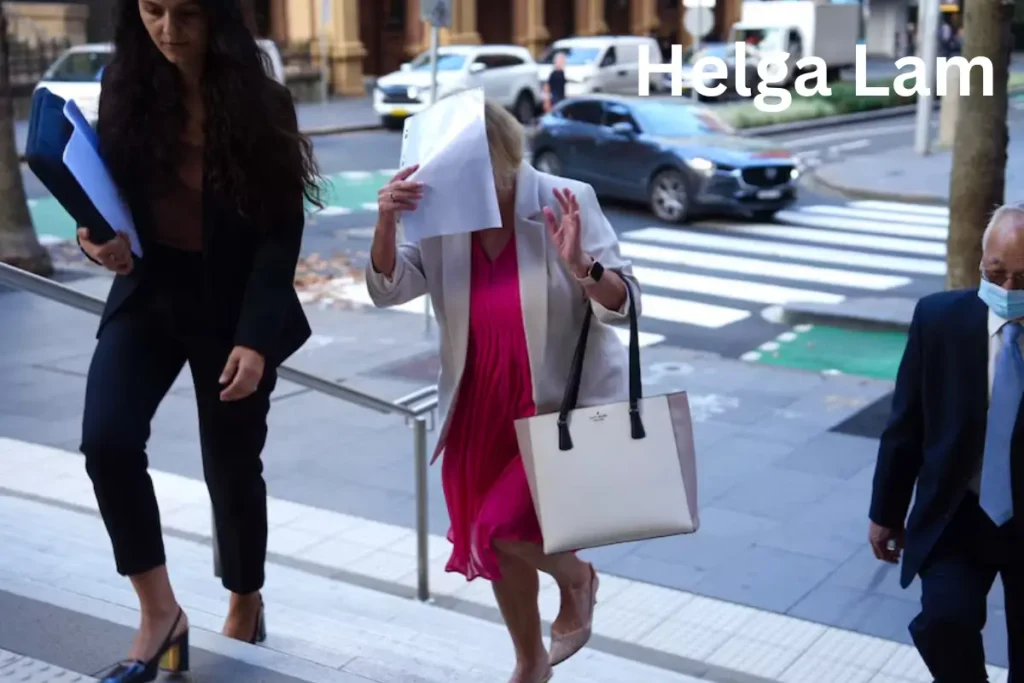
Another case from the same period compelled the courts to reexamine long-ignored wording in the Crimes Act while Grant was serving her sentence.
Between 1977 and 1979, four males, who were between the ages of thirteen and sixteen, claimed that Helga Lam, a former teacher at a Sydney school, had sexually assaulted them. She was accused with fifteen offences under section 81 by the police.
Helga Lam refuted every accusation.
The justices thoroughly examined section 81 when the case came before the NSW Court of Criminal Appeal in February 2024. According to Justice Roddy Meagher, the crime has traditionally targeted male criminals, especially those who have intercourse with youngsters or other adult men. He pointed out that the statute made consenting male homosexual relationships illegal, exposing its purpose.
According to Justice Peter Garling, if section 81 were to be interpreted as pertaining to women, it would have the “absurd” consequence of charging every adult woman who had consensual intercourse with an adult male.
Section 81 never applied to women, the court ruled unanimously. Consequently, regardless of the verifiable accusations, Helga Lam could never have committed the crime. The prosecution failed.
Grant’s Appeal: A Legally Impossible Offence
The Grant prosecution was immediately affected by the Helga Lam case judgement. Her attorneys filed an appeal in April 2024, claiming that the actions that formed the foundation of the section 66EA allegation depended on underlying activities that were not illegal under section 81 at the time.
In May 2024, Justice Sarah McNaughton concurred in her leading judgement. She pointed out that the 2018 legislative changes only permitted retroactive application in cases where the behaviour was already illegal. The conduct that served as the basis for the prosecution were not unlawful at the time since section 81 never applied to women. In essence, Grant had been found guilty of a crime that was illegal for her to have committed.
She was found not guilty when her conviction was overturned. Given that Grant had confessed the behaviour, Justice McNaughton recognised the victim’s severe grief but said the court was constrained by the criminal law.
Civil Action Against Helga Lam and the Inadequacies of the School
The four men who accused Helga Lam filed civil lawsuits against the State of New South Wales, claiming the school had not provided them with enough protection, when the criminal case against her fell through. The State paid $2.5 million in compensation and acknowledged its responsibility.
The State subsequently accused Helga Lam of carelessness and sought a share of those damages. In November 2025, Justice Ian Harrison heard the case.
The four guys provided in-depth testimony throughout the trial. They said that having sex with Helga Lam often took place in the staff room after school hours, which highlighted the betrayal of trust. In the 1970s, two men reported that Lam was having sex with kids to the principal of the institution, according to their testimony. Rather than taking action, the principal reacted angrily, accused them of lying, and refused to interact.
According to Justice Harrison, the principal’s rejection of the accusations essentially allowed the behaviour to continue, calling this reaction an “egregious failure of proper procedure and good governance.”
Helga Lam remained in denial throughout the hearing. Dominic Toomey SC, her attorney, said that one of the complainants had “manufactured” his claims to fit with old playground gossip. In addition, he said that the guys were driven by money and had exchanged tales. According to one complaint, the incident was just “venting” among former pupils over a teacher who had, in his words, been “let off on a loophole.”
Justice Harrison’s Conclusions: Negligence Did Not Occur, Abuse Did
Justice Harrison said that he was “comfortably satisfied” that the sexual behaviour each of the men had recounted had taken place after weighing all the available information. He pointed out that he used the Briginshaw principle, which calls for treating severe accusations with caution even when the civil balance of probability is the standard of evidence.
But whether Helga Lam had been careless was the crucial issue. The State had to demonstrate that Lam should have anticipated that her actions would result in psychological injury in order to show carelessness.
Justice Harrison made a clear contrast between what Helga Lam might have fairly been expected to know as an individual teacher in the 1970s and what the State, as an institution, should have known given its “considerable storage of institutional knowledge and experience.”
Although Lam would have been aware that her actions were immoral, he said it did not imply that she should have anticipated the long-term damage that is now acknowledged. He continued by saying that while the Royal Commission into Institutional Responses to Child Sexual Abuse has raised awareness in the society, this understanding was not prevalent over fifty years ago.
- Foreseeability was not shown by the State. As a result, negligence was not proven.
- According to Justice Harrison, if negligence had been shown, he would have mandated that Lam pay 35% of the compensation; however, the contribution claim was rejected due to this failing.
Helga Lam’s expenses, including those previously granted after the criminal prosecution’s failure, were ordered in her favour. Outside of court, her attorney said that she wanted to go on with her life and that the accusations and hearings had been very distressing.
The Grant and Helga Lam Decisions’ Wider Effects
The rulings have spurred much discussion across Australia. Many members of the public find it hard to understand how a teacher who confessed to having sex with a student can be exonerated based on a technical historical interpretation, while another teacher who was found to have had sex with students by a judge can still escape civil liability.
These instances demonstrate the essential distinctions between historical justice, civil law, and criminal law. They also highlight the loopholes left by antiquated laws that did not take female offenders into account. The results would have probably been significantly different if section 81 had been gender-neutral.
In conclusion
The tales of Grant and Helga Lam highlight the difficulties and limits of the legal system when society tries to rectify wrongdoing from a bygone age. They demonstrate how civil liability may fail in the absence of proof of what was predictable decades ago and how historical offences may collapse when tried against contemporary legislative interpretation.
These rulings highlight the significance of institutional accountability, statutory clarity, and the growing awareness of child sexual abuse, even while they continue to cause anguish for survivors and the community. The ramifications of these cases will continue to impact courts, legislators, and public discourse as Australia struggles with past abuse.
FAQs
What was the key legal issue in the Helga Lam case?
The central issue was whether the old offence of indecent assault on a male under section 81 of the Crimes Act could legally apply to women. The NSW Court of Criminal Appeal ruled that the provision only ever applied to male offenders, which meant Helga Lam could not have committed the offence. This legal interpretation caused the criminal charges to collapse.
Why was Grant’s conviction overturned even though she admitted the conduct?
Her conviction relied on section 66EA, which can only be used retrospectively if the underlying acts were crimes at the time. After the Helga Lam ruling confirmed that section 81 did not apply to women, Grant’s conviction was considered legally impossible. The Court of Criminal Appeal therefore quashed her conviction and entered an acquittal.
Did the Supreme Court find that abuse occurred in the Helga Lam civil case?
Yes. Justice Ian Harrison stated he was “comfortably satisfied” that the abuse alleged by the four men occurred. However, this finding did not translate into civil liability because the legal test for negligence was not met.
Why wasn’t Helga Lam found negligent in the civil proceedings?
The State had to prove that Helga Lam should have foreseen the risk of psychological harm in the 1970s. The court found that social awareness of child sexual abuse and its consequences was vastly different then, and without evidence showing she would have understood the long-term harm, negligence could not be established.
Why did the school avoid blame for the abuse in the civil case?
The State did not avoid blame; it admitted liability and paid $2.5 million in settlements. However, its attempt to recover money from Helga Lam failed because negligence could not be proven against her personally, even though the principal’s failure to act was described as an “egregious” breach of proper conduct.
What role did the school principal play in the Lam case?
Two former students reported their concerns to the principal in the 1970s. Instead of investigating, he dismissed them harshly, accusing them of lying. The judge criticised this response, saying it enabled the conduct to continue and was a significant failure of governance.
Why did the DPP charge Grant under section 66EA instead of the old law?
The DPP moved to section 66EA because it allows prosecutors to allege a persistent course of sexual conduct over time. The section was strengthened in 2018 and can apply to historical cases, but only if the underlying acts were unlawful at the time—an issue later undone by the Helga Lam ruling.
What impact have these cases had on historical abuse prosecutions in NSW?
The outcomes have forced prosecutors to reassess how they frame charges in historical abuse matters, especially those based on repealed laws that might have been gender-specific. They have also prompted calls for further reform to ensure the law reflects today’s understanding of abuse, regardless of the era in which it occurred.