
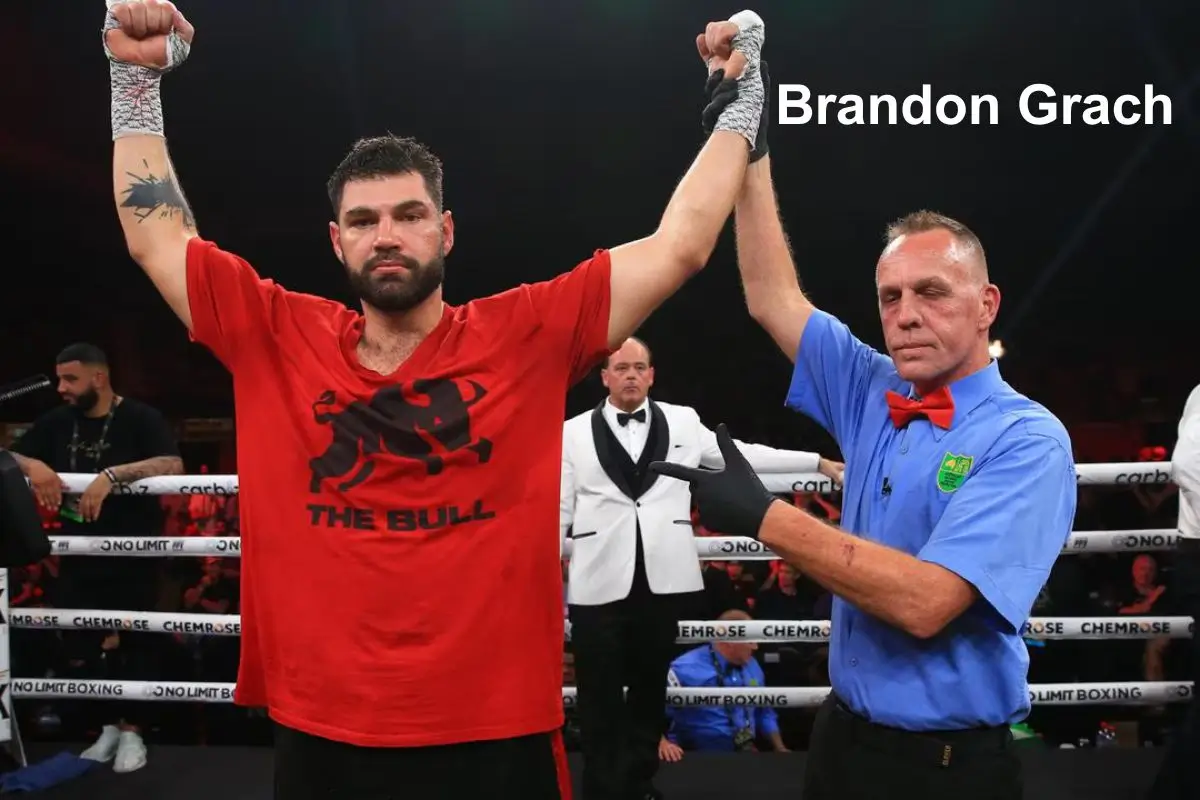
Brandon “The Bull” Grach is one of the most fascinating heavyweights to emerge from the Australian boxing scene in recent years, not just because of his power or his knockout highlights, but because of the unusual, tough and unpredictable life path that shaped him long before he stepped into a professional ring. Born in Newcastle, New South Wales, he grew up in a region known for its rugged character and strong sporting culture. Nothing about his story fits the standard mold of a rising athlete. Instead, he travelled through some of the hardest and most physically demanding environments in the country, working as a ringer on cattle stations, serving as a rifleman in the Australian Army and completing an architecture degree before returning to the sport that first captured his attention as a teenager. His return to boxing was not planned, nor was it expected, but it became one of the most talked-about comeback stories in domestic heavyweight circles. This journey set the foundation for a short but unforgettable professional career marked by explosive knockouts, a viral highlight that caught national attention and a relentless determination that defined him inside and outside the ring.
Early life in Newcastle and entry into boxing
Growing up in Newcastle created the groundwork for Grach’s toughness. The city is known for its working-class roots, its proud sporting identity and its culture of resilience. From a young age he developed a strong physical profile through outdoor activities and local sports, eventually finding his way into amateur boxing. His early involvement in the sport immediately revealed natural talent. He had the height, the reach, the power and the instincts that distinguish a promising heavyweight. Newcastle’s boxing community, known for its competitive spirit, pushed him to develop the discipline and fundamentals required to compete at a national level.
Grach’s amateur achievements became a strong indication of what he was capable of. Australian boxing sources have reported that he collected several significant wins across youth tournaments and claimed up to four national amateur titles before turning eighteen. These early victories were built on a combination of his physical strength and his ability to adapt quickly during bouts. His performances drew attention from trainers and competitors who recognised how much potential he had. But despite a clear path toward the professional ranks, life took him in another direction entirely. His years as a rising amateur came to a pause as he stepped away from the sport, starting a new chapter defined by work, service and personal transformation.
A decade of change: Outback work, military service and academic study
The decision to step away from boxing led him into environments far removed from the sporting world. One of the most defining aspects of his life was his work as a ringer on cattle stations. Working as a ringer is physically punishing and demands both stamina and resilience. Days often begin before sunrise and extend long after sunset, with labour that tests every muscle. Handling livestock, repairing equipment, driving machinery and navigating harsh heat conditions became part of his everyday routine. This experience developed his raw physical strength in ways no gym program could replicate. It also shaped his mentality, teaching him endurance, patience and the ability to keep going long after comfort disappears.
Alongside his work as a ringer, he enlisted and served as a rifleman in the Australian Army. Military life sharpened his discipline and deepened his mental toughness. Rifleman training is demanding and requires precision, quick decision-making and the ability to perform under stressful conditions. The structure and expectations of army life helped him refine his focus and build emotional control, both of which later became assets in the boxing ring. The combination of rural labour and military service gave him a foundation of strength, endurance and resilience that most athletes spend years trying to build.
Adding another dimension to his life, he pursued and completed an architecture degree. Balancing academic study with physically demanding work demonstrates his versatility and determination. Architecture requires creativity, attention to detail, long-term planning and the ability to solve complex problems. These intellectual qualities complemented his physical attributes, making him a more rounded and strategic thinker when he eventually returned to boxing. His academic achievement showed that he was not defined by a single path, and it illustrated his ability to commit to demanding goals across very different fields.
Together, these experiences formed a decade of growth that shaped the man who would later become known as “The Bull”. This period built his confidence, broadened his understanding of discipline and gave him the ability to push through hardships without breaking. By the time boxing re-entered his life, he was a very different person from the teenager who first stepped into the ring.
A moment of inspiration and the return to boxing
The turning point that brought him back to the sport happened unexpectedly. While working on a cattle station in Roma, Queensland, he watched George Kambosos Jr defeat Teófimo López in one of the most iconic upsets in modern boxing. The fight reignited something inside him. Seeing an Australian fighter rise against world-class opposition stirred motivation and reminded him of his own unfulfilled potential. That moment of inspiration became the catalyst for his return to the sport after almost a decade away.
Leaving the outback environment behind, he moved back to Newcastle and resumed full-time training. His return surprised many, as he was older than the typical emerging prospect, but his maturity and life experiences gave him a unique advantage. He approached boxing with a new level of seriousness and discipline, having built mental hardness through years of physically demanding work and military service. Signing with No Limit Boxing, one of Australia’s top promotional teams, allowed him to train under professional systems and compete on some of the biggest domestic cards in the country.
Rise through the heavyweight ranks and the birth of “The Bull”
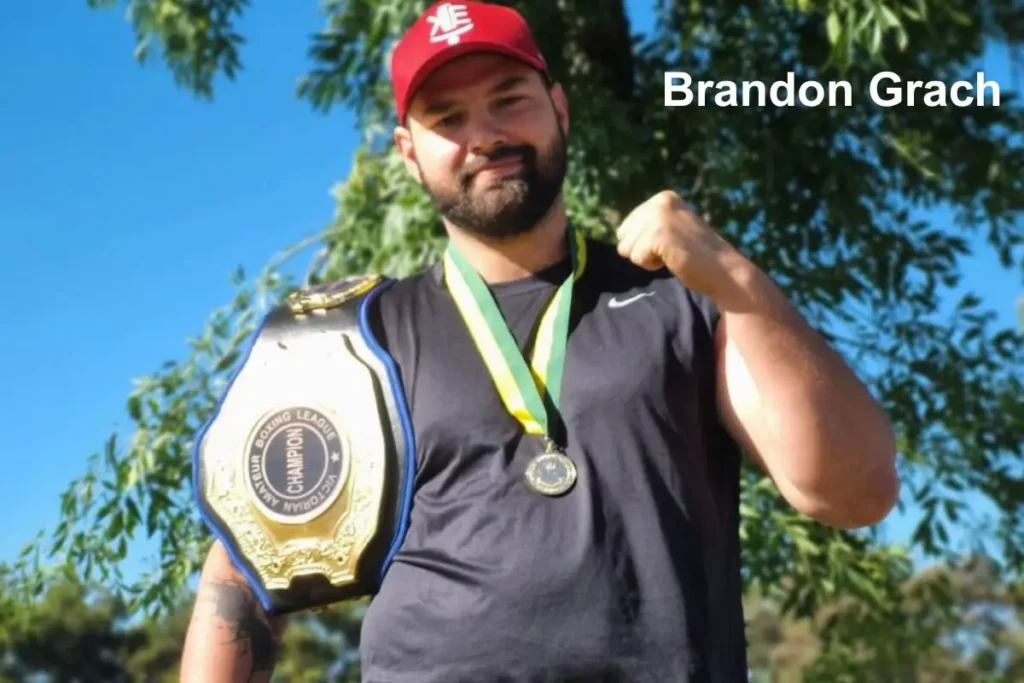
As he re-entered the sport, his presence immediately stood out. At 193 centimetres tall and weighing around 240 pounds, he had the perfect heavyweight frame. His strength, built through real labour rather than gym routines, made him a naturally powerful puncher. Trainers and matchmakers quickly recognised that he had the qualities of a true heavyweight threat. His nickname, “The Bull”, reflected his forward-moving style, his thick frame and his intimidating power.
His professional record, reflective of the information you provided, stands at 4–1 with a streak of one win. His progression through the heavyweight ranks included several memorable bouts, but none more talked about than his first clash with Liam Talivaa. This fight took place on a major No Limit card headlined by Nikita Tszyu and Dylan Biggs, with national attention already focused on the event. During the bout, Talivaa managed to drop Grach early, showing that the contest was far from one-sided. However, as the second round closed, Grach unleashed a devastating left hook that landed with perfect timing. The punch knocked Talivaa out cold just as the bell sounded to end the round. The knockout quickly spread across social media, appearing in highlight reels and being discussed widely by commentators. Many labelled it one of the most dramatic Australian knockouts of the year.
The viral moment elevated his profile and solidified his reputation as an explosive and dangerous heavyweight. Fans immediately associated him with raw power and the ability to end fights in an instant. This momentum carried into his next major performance, a victory over John Maila in July 2024. The significance of the Manila bout extended beyond the result itself. It marked his first fight after recovering from thumb surgery, proving that he could return to form despite setbacks. He controlled the tempo throughout the fight and earned a stoppage in the third round, further positioning himself as a rising contender in the heavyweight division.
The rematch with Liam Talivaa and the only loss of his professional career
One of the defining rivalries of his time in the ring was with Liam Talivaa, and the anticipation surrounding their second meeting was high. Talivaa had spent months preparing for the rematch, studying the mistakes that led to his knockout defeat in their first encounter. When they met again in April 2025, both fighters entered the ring with a point to prove. The bout was intense from the opening bell. Talivaa came forward with a more calculated strategy, using better distance control and a disciplined defensive guard. Grach, true to his nature, applied pressure and looked for opportunities to land the kind of power shots that had ended their first fight.
Despite moments of success, the fight gradually shifted in Talivaa’s favour. His adjustments, particularly his ability to avoid the left hook and counter with combinations, allowed him to take control in the later rounds. In the fifth round, Talivaa pushed through with sustained pressure, eventually forcing the referee to step in and stop the fight. This marked the only recorded loss of Grach’s professional career. While disappointing, the defeat highlighted his willingness to take on strong opponents and to continue testing himself at the highest domestic level. Many fighters avoid rematches after dramatic knockouts, but he accepted the challenge without hesitation.
A strong comeback and last recorded victory
Following the loss to Talivaa, he refused to let the setback define the remainder of his career. Training with fresh focus, he returned to the ring on 20 August 2025 under the No Limit Boxing banner. This time he faced Bensyn Pauga, a fighter known for durability and toughness. The bout proved to be short but effective. From the opening seconds, Grach asserted his presence, using controlled aggression to dictate the pace. Within the first round, he found his openings and applied relentless force, forcing a stoppage that secured his final professional win.
This victory reaffirmed his ability to rebound from adversity and maintain his presence in the Australian heavyweight scene. It also showcased his trademark style: direct, powerful and capable of ending fights before they had time to develop. While some fighters struggle mentally after their first professional loss, he demonstrated that he could return even stronger.
Training habits, physical preparation and fighting style
One of the reasons behind his explosive power and strong performances in the ring is the unique training foundation built through his earlier life experiences. Unlike most fighters who rely on structured gym programs from a young age, he developed his physical strength through years of outdoor labour and high-intensity work. This foundation gave him an edge that translated directly into striking power. Strength developed organically through heavy machinery handling, livestock management and physically taxing daily responsibilities shaped the powerful physique that spectators saw on fight night.
When he returned to professional training, he integrated this natural strength with formal boxing workouts. His training regime typically included pad work, bag drills, road running, mitt sessions and conditioning circuits designed to complement his aggressive approach. Because he fought at heavyweight, his program also emphasised stamina and recovery to ensure he could maintain pressure across rounds. Sparring with top domestic heavyweights improved his timing and sharpened his reactions against different styles. His approach to training remained grounded in discipline and efficiency, traits adopted during his army years.
Diet also played an important role in his physical readiness. While he did not publicly outline a specific nutrition plan, his social media posts and training discussions suggested a preference for high-protein meals and clean, uncomplicated food choices. This style of eating matched his practical personality and rural lifestyle. Maintaining a weight near 240 pounds required consistent nutrition, hydration and balanced intake throughout his training cycles.
His fighting style became defined by several core attributes. First, he carried immense natural punching power, particularly in his left hook, which became one of the most recognised weapons in Australian boxing during his active years. His second major attribute was his pressure-based approach. He constantly moved forward, cutting off the ring and forcing exchanges. His third attribute was durability. Years of physical conditioning and military discipline contributed to his ability to withstand punches and remain composed. Together, these qualities formed a style that was both destructive and entertaining, making him a fan favourite during his brief but memorable career.
Amateur background and development before turning professional
While much of his fame came from the professional ranks, his amateur career played an essential role in building the technical base that he carried into later fights. Reports from the Australian boxing community mention that he collected several notable victories across national tournaments and earned multiple amateur titles. Some accounts state that he held up to four Australian amateur championships before turning eighteen, a feat that highlights his early potential. These achievements were earned through hard training, discipline and natural ability.
His amateur experience helped refine his footwork, sharpen his understanding of timing and improved his ring awareness. Even though he stepped away from the sport for years, these technical foundations remained with him and resurfaced when he returned. Amateur boxing exposed him to fast-paced competition, a variety of fighting styles and high-pressure environments. These experiences contributed to his confidence and adaptability as a professional.
Public image, social media presence and fan perception
Outside the ring, he cultivated a public persona rooted in authenticity. His social media presence reflected the same straightforward nature he exhibited in interviews and in the ring. His Instagram posts often featured rural landscapes, horses, training sessions, outback imagery and glimpses of the hard-working lifestyle he lived before returning to boxing. Fans connected with this down-to-earth personality, seeing him as a genuine representation of the rugged Australian spirit.
He did not use social media for theatrics or controversy. Instead, he displayed honesty, hard work and a desire to improve. This transparency made him relatable to fans from both rural and urban areas. His knockout of Talivaa sparked strong engagement online, with comments praising his power and many sharing the video across various platforms. Commentators from Fox Sports and No Limit Boxing also praised his power, calling him one of the most dangerous punchers emerging in Australia.
The announcement of his retirement in late 2025 generated significant conversation among fans. Supporters expressed respect for his journey and appreciation for the excitement he brought to the heavyweight division. Even though his professional record was short, his impact was powerful enough to secure a dedicated fanbase that admired his resilience and character.
Financial context and realistic net worth expectations
Financial information about professional fighters is often private, and this is the case for his career earnings. BoxRec lists his disclosed income as zero, which is standard for many fighters and does not reflect actual payments. Fighters on Australian undercards typically earn modest purses unless competing for high-tier regional titles or appearing on major pay-per-view events.
Considering his short but active career and the level of events he appeared on, his estimated net worth most likely falls between fifty thousand and one hundred fifty thousand Australian dollars. This estimate accounts for fight purses, promotional bonuses, sponsorship opportunities and personal income outside of boxing. While he did not compete long enough to accumulate the earnings of elite heavyweights, his financial position aligns with the typical path of rising Australian fighters who appear on major domestic promotions.
Retirement decision and the end of a memorable chapter
His retirement came in late 2025 and was influenced by two major factors. First, he battled injuries that made continued competition difficult. Second, finding opponents willing to fight him became increasingly challenging. Heavyweights with knockout power often struggle to secure consistent fights because of the risk they pose. Even when fighters want to face them, negotiations, timing and promotional dynamics can complicate matchups.
When he announced his retirement, the news travelled quickly across boxing circles. Fans and commentators acknowledged that although his career was brief, he delivered some of the most memorable moments in recent Australian boxing. His knockout of Talivaa remains a highlight that fans continue to revisit. His authenticity, grit and willingness to face tough opponents left an impression that will last far beyond the years he spent competing professionally.
Legacy and impact on Australian heavyweight boxing
Brandon “The Bull” Grach leaves behind a legacy shaped by courage, resilience and genuine strength. His journey from Newcastle to the outback, through the army, into academia and finally into the professional ring is a powerful reminder that success is not confined to a single path. He proved that dreams can be rediscovered and pursued at any stage of life. His story resonates with anyone who has taken the long way around to reach a goal.
His violent knockout victories, especially the unforgettable finish against Talivaa, cemented his place in Australian boxing history. His relentless approach and raw physical power brought excitement to every fight he entered. He embodied the rugged, hardworking character associated with the Australian heavyweight tradition. While his time in the sport was short, his impact remains meaningful. He inspired younger fighters, energised fans and created moments that will continue to be replayed and discussed.
Today, his story stands as an example of following one’s passion, regardless of detours. He showed that a fighter’s heart is not built in a gym alone. It is crafted through life’s toughest challenges, in the heat of the outback, through military discipline, in classrooms, on long roads far from home and finally under the lights of the ring where everything comes together in a single moment of purpose. In this way, Brandon “The Bull” Grach forged a legacy that goes beyond wins and losses and continues to define him as one of the most memorable figures to step into Australia’s heavyweight boxing scene.
Conclusion
Brandon “The Bull” Grach’s journey through Australian boxing is one defined by heart, grit and an unmistakable sense of purpose. His story carries the weight of real experience — from long days on cattle stations and the discipline of army life to the precision of academic study and the intensity of professional fighting. Each chapter shaped a stronger, sharper and more grounded version of himself, and every moment in the ring reflected the resilience he built far from the spotlight. His knockout victories, particularly the unforgettable finish against Liam Talivaa, left a mark on fans who recognised in him a fighter who brought honesty and raw power to every performance. While his professional career was brief, it was rich with moments that showcased both his potential and his determination. His retirement closed a chapter, but it didn’t diminish the impact he made or the respect he earned along the way. Brandon Grach remains a figure admired not only for what he achieved in the ring but for the life he lived before stepping into it, proving that the spirit of a true fighter is forged through every challenge, every setback and every decision to keep moving forward.