
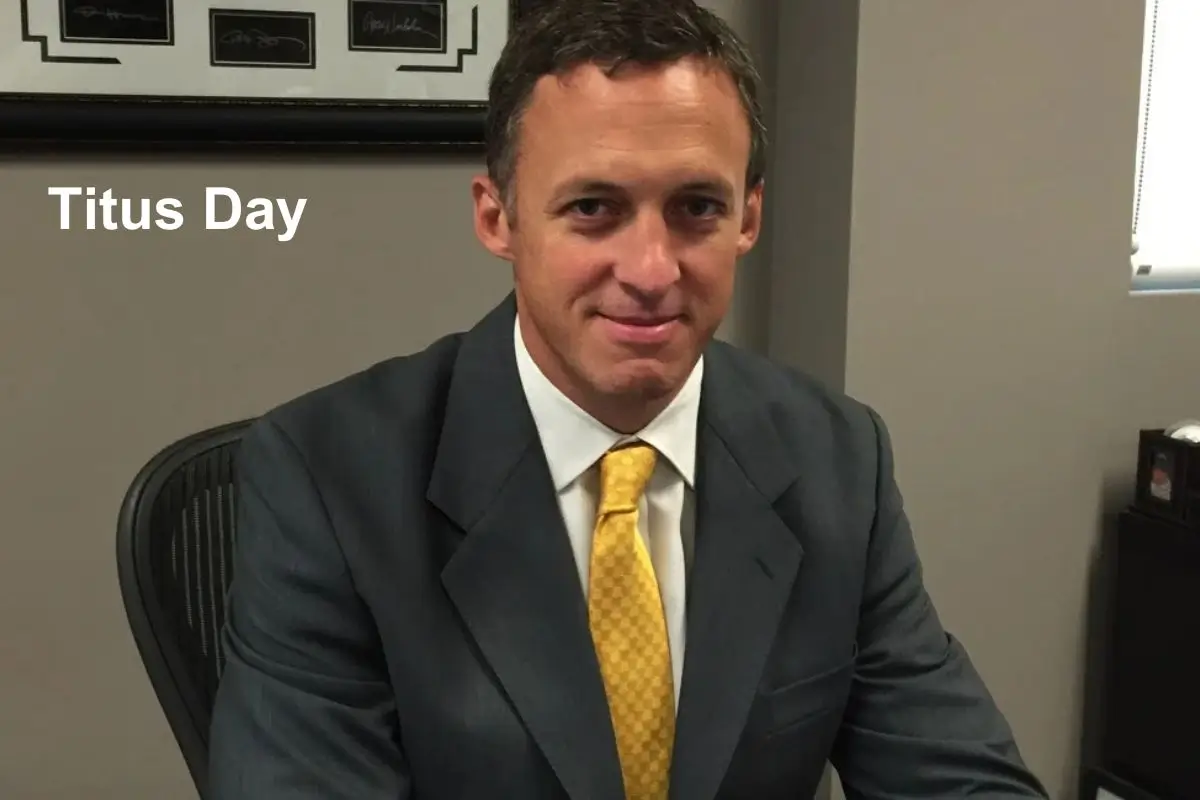
Few legal sagas in Australian entertainment have unfolded with the intensity, duration and public fascination of the case involving Titus Day and his former high-profile client, Guy Sebastian. What began as a private professional breakdown between a performer and his manager eventually escalated into a years-long conflict marked by a police investigation, criminal charges, an initial conviction, a successful appeal, a retrial resulting in partial acquittals, and the final withdrawal of all remaining charges by the Director of Public Prosecutions. The trajectory of Titus Day’s life changed dramatically as the relationship collapsed and a legal battle consumed nearly a decade of personal and professional existence. The consequences extended beyond the courtroom into financial ruin, the forced sale of the family home and a profound reshaping of his public identity. Understanding the full story requires examining Day’s early life, the evolution of his management career, the critical relationship with Sebastian, the events that triggered the police investigation, the evidence presented in court, the reasons his first conviction was overturned and the circumstances that led to the eventual dismissal of all charges. It is a saga that mirrors the complexities of trust, money, reputation and contractual obligations in Australia’s entertainment industry.
Early Life and Educational Foundation
Titus Day was born in 1973 and raised in an environment where education and professional aspiration were emphasised strongly. He attended Sydney Grammar School, one of the nation’s most academically rigorous institutions, where he distinguished himself in subjects that demanded analytical precision. His strengths in English, legal studies and the humanities foreshadowed his future career direction. The ability to interpret language, understand complex systems and manage detail-oriented tasks became central to his professional identity.
Following his secondary education, Day pursued a Bachelor of Laws at the University of Sydney. University training provided a deep understanding of contractual relationships, corporate governance, dispute resolution, royalties and the responsibilities owed between parties under Australian law. Although he ultimately chose a career path outside traditional legal practice, the knowledge and discipline he acquired as a law student shaped everything he later did in talent management. The skills of drafting, interpreting agreements and navigating legal frameworks allowed him to build a management career with sophistication uncommon among many agents.
Early Career and Entry into the Entertainment Industry
After completing his degree, Day secured a position as in-house legal counsel for IMG, an international leader in the sports, fashion and entertainment industries. At IMG, he was immersed in contract negotiation, intellectual property management, sponsorship structures, appearance fee arrangements and complex financial transactions involving high-profile talent. This role demanded an ability to work under pressure, to safeguard the legal interests of clients and to ensure that binding agreements were understood and adhered to. It also exposed him to the realities of entertainment finance, where performance income, royalties, endorsements and corporate appearances form the financial backbone of an artist’s career.
The professional network Day developed during this period spanned musicians, broadcasters, television personalities and corporate stakeholders. With that foundation, he made the decision to establish his own management company, leveraging both experience and legal knowledge to build a more independent practice.
Founding of 6 Degrees Management and Rise in the Industry
In 2009, Day founded 6 Degrees Management, a boutique Australian talent agency that represented musicians, actors, performers, athletes and public figures across various sectors. The business model relied heavily on Day’s legal skills, particularly his ability to negotiate favourable terms, manage financial arrangements and interpret the obligations of complex entertainment contracts.
Among the clients Day represented, Guy Sebastian emerged as the most well-known. Their relationship was professional, lucrative and initially characterised by mutual trust. Day handled touring arrangements, endorsement deals, television appearances, promotional events, corporate bookings and a significant number of live performances. He acted as both negotiator and financial manager, coordinating payments from promoters, event organisers, broadcasters and record labels.
For many years the partnership functioned smoothly. Sebastian’s career continued to grow, and Day played a central role in navigating the commercial demands placed on a high-profile Australian performer. Meanwhile, Day’s personal life was stable. He and his wife Courtney, a former Sony Music executive, were raising their children while balancing the pressures of management and industry travel.
The Breakdown of the Relationship with Guy Sebastian
Tensions between Day and Sebastian began to emerge around 2016. According to evidence later presented in court, Sebastian began to question the accuracy and timeliness of payments and financial statements. He claimed that some performance fees had not reached him and that discrepancies were appearing in accounts he believed should have been straightforward. Requests for clarification reportedly led to repeated conversations about missing statements and unexplained delays.
By 2017, the relationship had deteriorated beyond repair. Sebastian terminated Day’s services and began raising concerns regarding unpaid funds he believed were owed to him. Day responded by insisting he had acted appropriately and that some of the funds in question were either legitimately held or related to commissions or expenses he had not yet been compensated for. What began as a contractual disagreement rapidly escalated as claims and counterclaims emerged over financial entitlements.
Civil Disputes and Escalation Toward Criminal Proceedings
Following the breakdown of the relationship, both parties initiated civil action. Sebastian accused Day of withholding royalties, performance fees and other income. Day maintained that he was owed unpaid commissions and that any delays or inconsistencies were administrative in nature, not evidence of wrongdoing.
Civil disputes of this nature, though contentious, are not uncommon in entertainment. However, in 2018 the matter escalated dramatically when Sebastian’s concerns were referred to police. Detectives from the NSW Police Financial Crimes Squad began reviewing the financial dealings of 6 Degrees Management. What might have remained a private commercial dispute transformed into a full-scale criminal investigation with significant public interest.
Police Investigation: From Financial Questions to Criminal Allegations
Between 2018 and 2020, police conducted an intensive investigation into the financial arrangements between Day, Sebastian and associated corporate entities. Detectives examined years of invoices, bank records, email correspondence, promotional contracts, royalty payments, tour settlements and booking documentation. They cross-referenced payments from event promoters with transfers made by 6 Degrees to Sebastian. They interviewed Day, Sebastian, administrative staff, accountants, promoters and individuals involved in the processing of royalties and live performance fees.
Several key payments became central to the investigation. Among them were performance fees relating to Sebastian’s appearances as a support act for Taylor Swift’s 2013 Australian tour, corporate event earnings in the tens of thousands of dollars, royalties scheduled to be distributed through APRA AMCOS and Sony, and funds linked to charitable events. Police alleged that these payments were received by 6 Degrees but not forwarded in full to Sebastian.
Detectives argued that discrepancies across numerous transactions formed a pattern. They alleged deliberate deception rather than administrative oversight. By mid-2020, after nearly two years of investigation, police moved to arrest Day at his Bondi home. Media crews captured the arrest on camera, transforming a behind-the-scenes industry dispute into a national headline.
The First Trial: 2022 Conviction and Incarceration
The 2022 trial was one of the most closely followed criminal proceedings in the entertainment community. Prosecutors presented their case as one of systematic dishonesty. They argued that Day had intentionally withheld substantial sums from Sebastian and misused his managerial position for personal financial advantage. The Crown pointed to specific transfers, alleged underpayments and internal documents that they said demonstrated deliberate misappropriation.
Sebastian testified at length during the trial. He spoke about the gradual decline in trust, his discovery of missing payments and his belief that Day had breached the obligations expected of a manager entrusted with a client’s financial livelihood. The prosecution characterised Day’s conduct as methodical and intentionally deceptive. They argued that Day, as a lawyer, understood fully the nature of his obligations and the ramifications of diverting income.
The defence presented a markedly different narrative. They argued that many of the disputed payments were misunderstandings rooted in the complexities of the entertainment industry. They challenged the prosecution’s interpretation of the transactions and emphasised that Day had been operating under intense personal stress during his mother’s terminal illness, which contributed to administrative mistakes. The defence rejected the allegation of criminal intent, describing the matter as a commercial disagreement rather than a calculated fraud.
Despite the defence’s efforts, the jury delivered guilty verdicts on several charges. Day was sentenced to four years’ imprisonment, with a non-parole period of two and a half years. He served approximately seven months before securing the opportunity to appeal.
The Appeal: Overturned Conviction and Judicial Reasoning
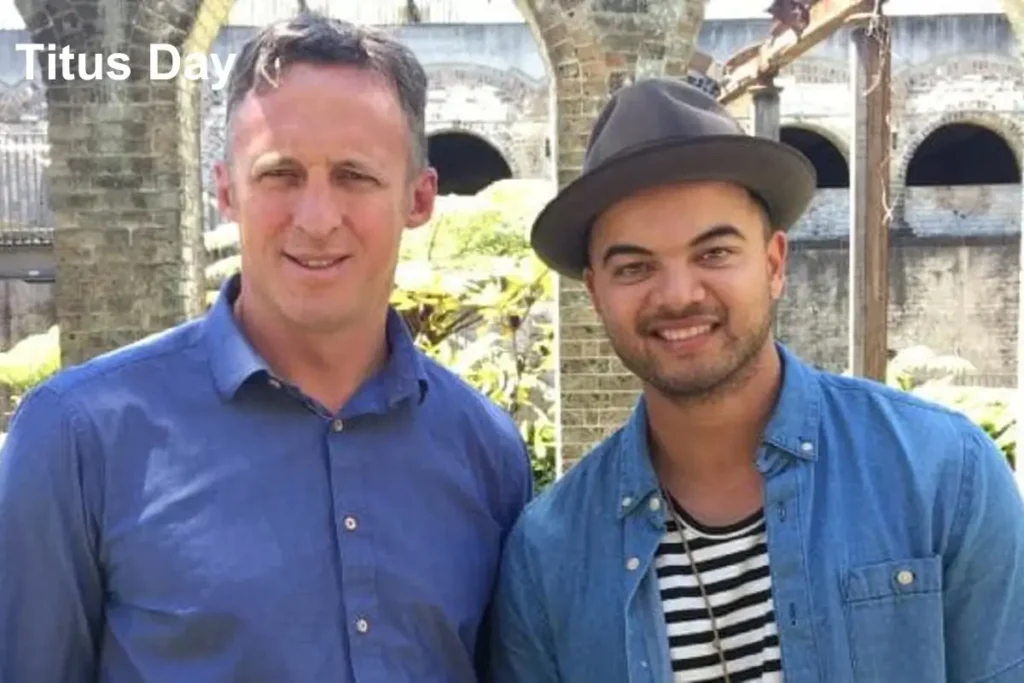
In 2023, the NSW Court of Criminal Appeal reviewed Day’s conviction. His lawyers argued that the original trial had been compromised by legal errors, including incorrect directions given to the jury and the improper admission of certain evidence. The appellate judges agreed that the trial had been affected by procedural issues significant enough to undermine the safety of the conviction. The appeal was successful, the verdict was quashed and a retrial was ordered.
The decision marked a major shift in the case. Day was released from custody and preparations began for a second trial. The ruling signalled that the prosecution’s case, while serious, was not beyond challenge and required reconsideration under corrected legal conditions.
The Second Trial: Acquittal, Jury Deadlock and Case Collapse
The second trial commenced in 2025 and concluded in mid-year. Under renewed scrutiny of the financial records and with the appellate court’s guidance taken into account, the jury acquitted Day of four charges involving approximately one hundred and fourteen thousand dollars. These acquittals represented a significant vindication of Day’s claim that he had not acted dishonestly.
However, the jury was unable to reach a unanimous verdict on the majority of remaining charges involving sums exceeding six hundred thousand dollars. Despite lengthy deliberations, the jury advised the court that they were unable to resolve their differences. The judge delivered instructions encouraging further consideration, but the jury ultimately remained deadlocked.
The failure to reach a verdict resulted in a hung jury, leaving the prosecution to decide whether to initiate a third trial. The uncertainty was resolved in September 2025 when the Director of Public Prosecutions announced that all outstanding charges would be dropped. The DPP cited insufficient prospects of securing a conviction in a new trial and determined that continuing proceedings was not in the public interest. This decision brought an end to the criminal case and confirmed that Day would face no further prosecution.
The Financial Aftermath and Forced Sale of the Bondi Family Home
Although Day emerged from the criminal process without a conviction, the financial consequences of defending himself across two trials were severe. Legal costs accumulated over years of litigation proved overwhelming. Only days after the DPP dropped the remaining charges, Day and his wife Courtney listed their Bondi family home for sale.
The property, located on Ocean Street, was no ordinary residence. Purchased in 2018 for four point two million dollars by Day, his father and his brother, it was one of the last significant undeveloped blocks in Bondi at the time. The decision to purchase the home was considered surprising within property circles because developers had shown strong interest in the land. The residence became the centre of family life and the backdrop to the unfolding legal battle. It was the home from which Day was arrested in 2020 and the place where his wife continued raising their three children during his incarceration.
The seven-bedroom property, notable for its spacious living areas and swimming pool, was scheduled for auction in October 2025. The sale was necessary to pay legal debts incurred during the years of proceedings.
Civil Proceedings Still Ongoing
Although the criminal case has concluded, civil disputes between Day and Sebastian continue. These predominantly relate to questions of unpaid commissions, royalty allocations and contractual entitlements. Civil litigation differs fundamentally from criminal prosecution because it focuses on financial responsibility rather than criminal intent. The outcome depends on a lower standard of proof and may take considerable time to resolve. For both parties, the civil matter represents the final unresolved chapter of a long and complicated professional relationship.
Impact on Titus Day’s Reputation and Career
The impact of the legal saga on Day’s professional reputation has been profound. Before the dispute, he was widely respected within the entertainment industry and recognised for his legal insight and management skills. The breakdown of his relationship with Sebastian and the criminal allegations that followed reshaped public perception of him, even after the charges were withdrawn.
Although legally cleared, the stigma of the accusations has affected his standing within the industry. Rebuilding a career in talent management will be challenging because many potential clients may associate him with controversy. Some believe he may pivot towards consultancy roles or legal advisory positions where his knowledge can be utilised without attracting the attention associated with front-line management work. Others anticipate that he may eventually speak publicly or publish a detailed account of his experiences within the industry and the justice system.
Timeline: Titus Day & Guy Sebastian Legal Saga
Early Relationship
- 2009 – Titus Day founded 6 Degrees Management.
- 2010–2016 – Day manages Guy Sebastian, overseeing tours, endorsements, corporate shows, and royalties.
- 2016 – Sebastian begins noticing financial discrepancies and requests clearer statements.
Breakdown & Civil Dispute
- Mid–2017 – Professional relationship between Day and Sebastian ends.
- Late 2017 – Sebastian alleges missing payments and unpaid royalties.
- 2018 – Both parties launch civil proceedings over disputed funds and unpaid commissions.
Police Investigation
- 2018 – NSW Police Financial Crimes Squad begins investigating financial dealings at 6 Degrees Management.
- 2019 – Detectives interview staff, accountants, promoters and examine payment trails, banking records and emails.
- Early 2020 – Police gather evidence on several disputed payments, including corporate fees, royalties and tour income.
- June 2020 – Titus Day is arrested at his Bondi home and charged with multiple counts of fraud and embezzlement involving more than $600,000.
First Trial (2022)
- April–June 2022 – First District Court trial takes place.
- Prosecution alleges Day intentionally withheld a series of payments, including corporate gig fees and royalties.
- Defence argues financial errors were administrative mistakes worsened by personal stress and a chaotic work environment.
- June 2022 – Jury finds Day guilty on several charges.
- September 2022 – Day is sentenced to four years in prison with a non-parole period of two and a half years.
- He serves approximately seven months in custody.
Appeal (2023)
- June 2023 – NSW Court of Criminal Appeal hears Day’s appeal.
- Judges find legal errors in the original trial including issues with jury directions and handling of evidence.
- Conviction is quashed and a retrial is ordered.
- Day is released from custody.
Second Trial (2025)
- April 2025 – Retrial begins.
- July 2025 – Jury acquits Day on four charges totalling about $114,000.
- Remaining charges involving over $600,000 result in a hung jury.
- Judge declares a mistrial due to deadlock.
Charges Dropped
- September 2025 – Director of Public Prosecutions declines to pursue a third trial.
- All remaining charges formally withdrawn.
- Criminal case against Day officially ends.
Financial Aftermath
- September 2025 – Days list their Bondi family home for sale to cover legal expenses.
- Property purchased in 2018 for $4.2 million; home becomes symbol of family stability during legal turmoil.
- October 2025 – House scheduled for auction.
Civil Proceedings
- Ongoing – Civil litigation between Day and Sebastian continues regarding unpaid commissions, expenses and contractual entitlements.
Conclusion
The story of Titus Day encompasses a dramatic arc of ambition, trust, conflict, legal battles and personal upheaval. It illustrates the fragility of professional relationships in the entertainment industry and demonstrates how financial disputes can evolve into devastating legal confrontations. From the breakdown of his long-standing partnership with Guy Sebastian to the police investigation, the trials, the successful appeal and the final dismissal of all charges, Day’s journey is a case study in the complexities of entertainment law and the emotional, financial and reputational consequences of prolonged litigation.
Although cleared of criminal wrongdoing, Day now faces the task of rebuilding his life after nearly a decade marked by courtrooms, headlines and scrutiny. The forced sale of his Bondi home symbolises the tangible costs of defending himself. Civil proceedings remain unresolved, and the final financial and professional implications are still unfolding. What is certain is that the Titus Day saga will be remembered as one of the most significant legal disputes in the Australian music industry, revealing the intricate intersection of money, trust and legal responsibility.
FAQs
Who is Titus Day’s wife?
Titus Day’s wife is Courtney Day, a former Sony Music executive. During the long legal battle and his period of incarceration, Courtney continued to raise their three children at the family’s Bondi home. She remained a central source of support throughout the investigation, trials and appeal process.
What was the outcome of the Titus Day appeal?
In 2023, the NSW Court of Criminal Appeal overturned Day’s 2022 conviction after identifying significant legal errors, including incorrect jury directions and issues with the handling of financial evidence. The successful appeal led to his release from custody and triggered a full retrial in 2025.
What is known about Titus Day’s family?
Titus Day comes from a family that has been closely involved in his personal and financial life. His father and brother co-purchased the Bondi property that later had to be sold to cover mounting legal costs. At home, his wife Courtney and their children endured years of public scrutiny and uncertainty as the case unfolded.
What was the final verdict in the Titus Day case?
The final outcome was that all criminal charges against Day were withdrawn. After the 2025 retrial resulted in four acquittals and a hung jury on remaining charges, the Director of Public Prosecutions decided not to pursue a third trial. This effectively ended the criminal proceedings with no convictions recorded.
Which clients did Titus Day manage?
Titus Day managed a number of Australian entertainers through his agency, 6 Degrees Management. His most high-profile client was Guy Sebastian, whom he represented for many years. He also worked with television personalities, musicians and public figures across various fields before the legal disputes reshaped his career.
What is the latest news about Titus Day?
Recent news surrounding Titus Day includes the conclusion of his criminal case in 2025, the DPP’s decision to abandon all remaining charges, and the forced sale of his Bondi family home to cover extensive legal fees. Civil proceedings between Day and Sebastian are still ongoing in the Federal Court.
What happened in the Titus Day court proceedings?
The court proceedings spanned several years and included two major District Court trials. In the first trial, Day was convicted and sentenced to prison. After a successful appeal overturning that conviction, the second trial in 2025 resulted in partial acquittals and a hung jury. The matter ended when prosecutors chose not to retry the case.
How does the Guy Sebastian tour relate to the allegations?
Payments connected to Guy Sebastian’s tours, including his role as a support act on Taylor Swift’s 2013 Australian tour, were central to the allegations. Prosecutors claimed some tour-related payments did not reach Sebastian and were instead withheld by Day. These payments formed a key part of the police investigation and courtroom arguments.