
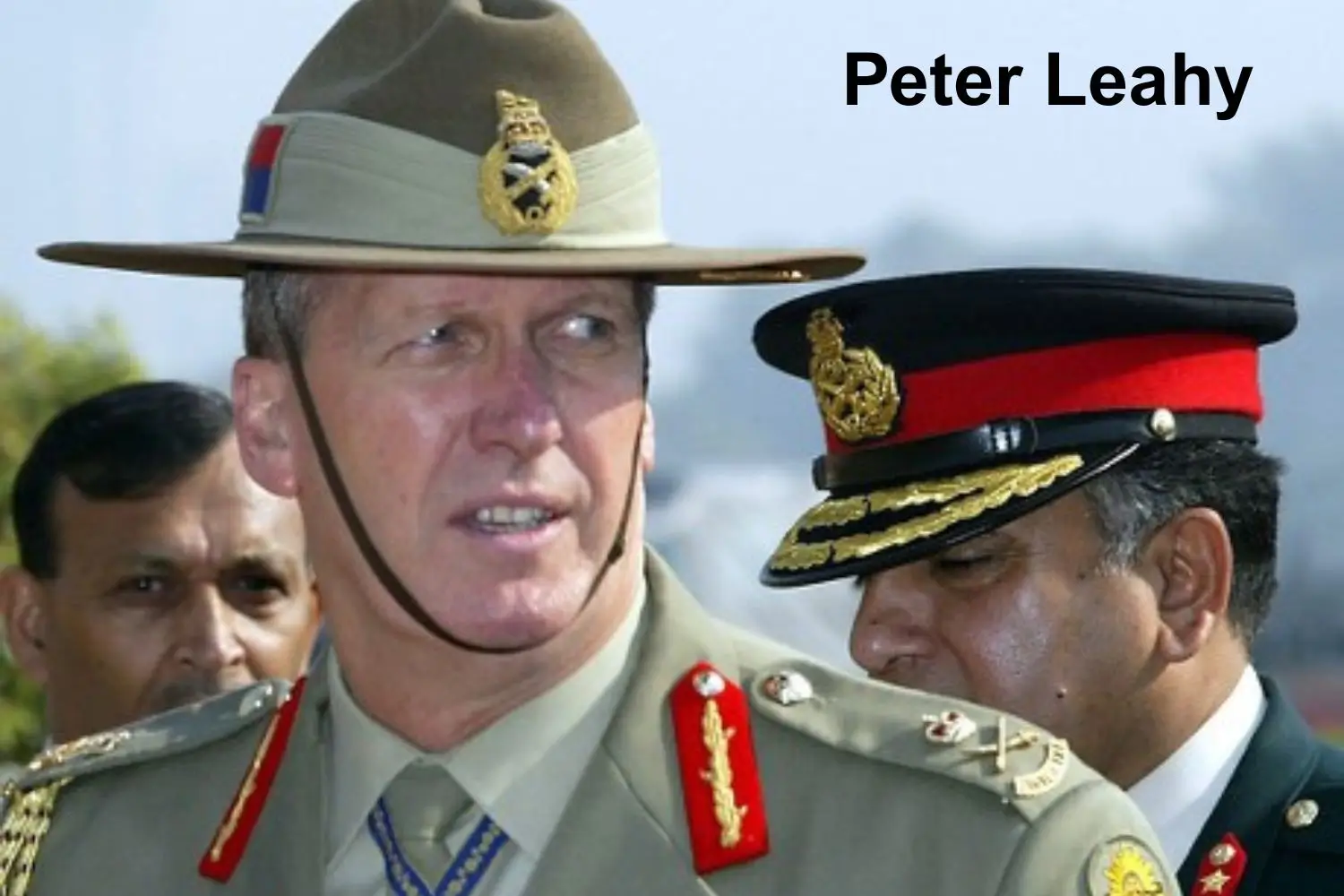
Peter Francis Leahy AC is a former senior officer of the Australian Army who served as Chief of Army from 2002 to 2008, guiding the force through a period of international deployments, doctrinal change and institutional reform. Known for his long service career, strategic thinking and post-military contributions to education, veteran welfare and defence industry advisory work, Leahy has become an influential voice in Australian national security. Born in Melbourne in 1952, his public record begins with his entry into the Royal Military College, Duntroon in 1971. After more than thirty years in active uniformed service, he continued shaping national debate, research and public understanding of defence through teaching, media commentary and corporate leadership roles. His career demonstrates how a soldier’s life can evolve beyond uniform, extending into strategic thought, academic engagement and public responsibility.
His biography reflects a professional commitment to planning, capability improvement and institutional development. From early training appointments and command roles to post-retirement positions in national security teaching, his trajectory shows a persistent focus on defence preparedness and public debate. Examining his life reveals an ongoing relationship with national strategic issues and a belief in long-term thinking applied to complex security environments.
Early Life and Family Background
Peter Leahy was born on 30 October 1952 in Melbourne, Victoria. Public information confirms his birthplace and year, but detailed accounts of his parents, family background, upbringing or siblings are not disclosed in official biographies, media coverage or academic profiles. Unlike some high-profile public figures, Leahy has not published or spoken extensively about personal family matters, childhood influences or early education prior to his entry into military training. In the absence of documented details, a responsible biography recognises that his early years remain largely private.
What is known is that his documented journey begins with enrolment in the Royal Military College, Duntroon in 1971. This suggests that his formative interests and career motivation developed early, leading him to choose officer training as a path. Duntroon recruits individuals with qualities associated with discipline, leadership and national service. While specific childhood experiences are not publicly recorded, entering Duntroon at age nineteen implies a deliberate decision to pursue a life structured around military responsibility, public duty and organisational commitment.
Beyond these confirmed facts, speculation about his parents, family profession, religious upbringing or financial circumstances would be inaccurate without evidence. His career offers a clear view of his professional values: order, planning, focus, leadership and duty. Public record therefore begins at the point he committed himself to officer training, and privacy remains maintained around the period before that decision.
Training at Duntroon and Entry into the Army
Peter Leahy entered the Royal Military College, Duntroon in 1971. Duntroon forms the foundation of officer training for the Australian Army, combining academic study with physical training, military discipline and leadership instruction. Its training system places cadets in environments that demand decision making, confidence, command presence and trustworthiness. Leahy graduated in 1974 with a Bachelor of Arts in Military Studies, awarded through the University of New South Wales.
Upon commissioning into the Royal Australian Infantry Corps, he began a career marked by continuous development, professional study and gradually increasing leadership responsibility. Early appointments included instructional duties at the Officer Cadet School Portsea, where he had responsibility for training new officer cadets. Instructional roles require skill in communication, planning and evaluation, and indicate confidence by senior leadership in an officer’s ability to shape future leaders.
Another important early experience came through an exchange posting to serve alongside Gurkha troops in Hong Kong. The Gurkhas are known internationally for discipline, loyalty and exceptional soldiering attributes, and working with them gave Leahy insight into military culture shaped by tradition, resilience and personal character. Exposure to international units allowed him to observe different command styles and broadened his understanding of the profession beyond national boundaries.
International Military Education and Strategic Development
Throughout his career, Peter Leahy strengthened his knowledge of strategy, leadership, national security and military planning through advanced military education. He attended the United States Army Command and General Staff College and earned a Master of Military Arts and Science. He undertook the Higher Command and Staff Course in the United Kingdom, as well as senior professional training within Australian defence institutions.
These academic programs focused on emerging security challenges, doctrinal analysis, operational design, international cooperation, and evaluation of strategic risks. International study encourages shared professional understanding between military forces, enabling cooperation and joint capability planning. Leahy’s training placed him within networks of officers from several countries, exposing him to defence planning outside Australian contexts.
This combination of graduate study and senior staff training developed his analytical skills, helping him understand military problems beyond a purely tactical lens. It prepared him for high-level planning, doctrine reform and capability assessment — areas that would define the later stages of his career.
Career Progression, Command Roles and Institutional Responsibility
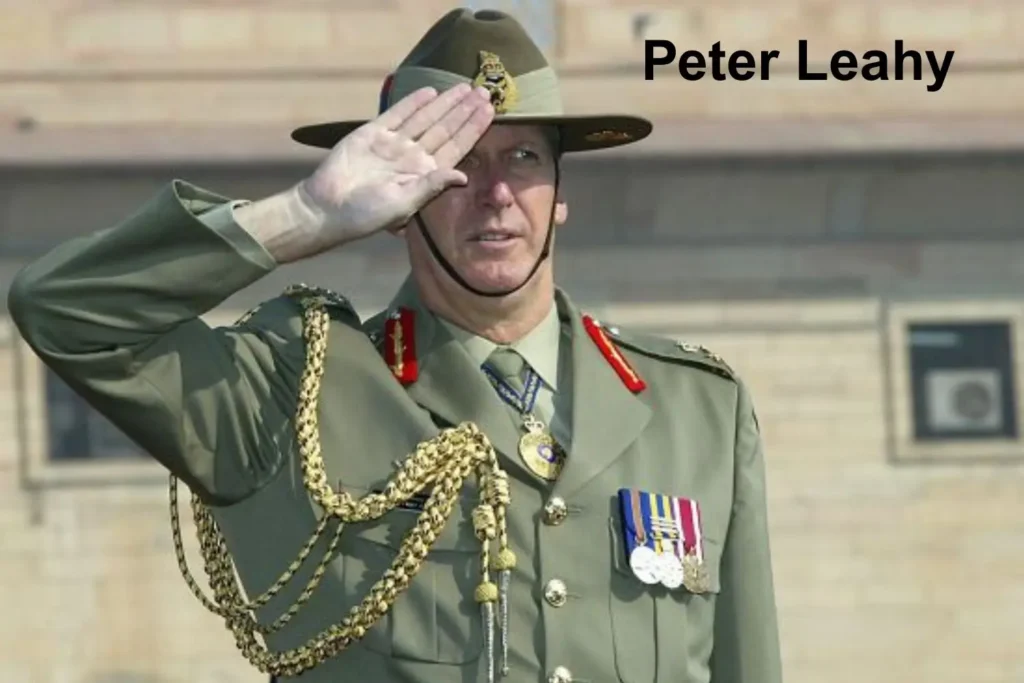
After initial instructional and operational postings, Peter Leahy progressed through major command appointments. He became Commanding Officer of the 8th/9th Battalion of the Royal Australian Regiment, managing training routines, unit morale, deployment preparation and soldier welfare. Battalion command requires confident decision making, direct leadership and operational planning for hundreds of personnel.
Later he served as Director of Army Research and Analysis. This position involved evaluation of doctrine, capability needs and future military development. In this role he would have been responsible for examining strategic trends and determining how the Army should respond to changes in equipment, training, technology and conflict environments.
He served as Commander of the 3rd Brigade and later became Chief of Staff at Headquarters Australian Theatre. These positions placed him in joint operation environments, planning for multi-service requirements, resource allocation and cooperation across separate command structures. He later served as Deputy Chief of Army, directly involved in decisions affecting recruitment, readiness, preparation and capacity for large-scale engagements.
These roles built institutional experience and understanding of organisational systems. His background combined operational responsibility with strategic planning, making him a suitable choice for Chief of Army, one of the highest leadership positions in the Australian Defence Force.
Appointment as Chief of Army – Leadership and Reform 2002–2008
Peter Leahy was appointed Chief of Army on 28 June 2002 and held the position until 3 July 2008. This six-year period is one of the longest modern tenures in the role. During this time the Army was engaged in operational planning and deployments connected to Iraq, Afghanistan, East Timor and the Solomon Islands. These required cooperation with international partners, training coordination, enhanced support systems and logistics planning.
Leahy emphasised modernisation as a priority, supporting development of improved communications systems, armoured mobility, protective equipment and networked capability. He recognised that contemporary operations involve not only combat tasks but also social, political and humanitarian considerations. As a result, doctrine reform under his leadership reflected complex conditions encountered during overseas and regional deployments.
He remains the only Chief of Army in recent history who did not personally deploy to an active combat theatre, although he held major planning responsibilities connected with operational environments. This characteristic is recorded as a unique aspect of his biography.
Strategic Reflections and Lessons from Overseas Deployments
After retiring from military service, Leahy reflected publicly on operations in Afghanistan and other deployments. He stated that Australian soldiers performed with professionalism and sacrifice, although long-term stability was not achieved. He expressed concern that planning often underestimated the importance of civil agencies, infrastructure development, political stability and humanitarian support in conflict environments.
His reflections highlight an understanding that military force alone rarely resolves complex situations. He demonstrated belief in coordinated approaches involving diplomacy, aid programs, governance development and multilateral cooperation. These reflections continue influencing discussions about national security policy, veteran welfare and preparation for future deployments.
Academic Role, Research and National Security Teaching
After retiring in 2008, Leahy joined the University of Canberra as Professor and became the foundation Director of the National Security Institute. His teaching covers subjects including terrorism, defence planning, national security policy, Indo-Pacific security relationships and strategic risk analysis.
Academic involvement allows him to mentor students entering defence, policy, intelligence and security research careers. Research topics include comparative defence capability, terrorism studies, regional strategy and long-term security challenges. Academic work has become one of his lasting forms of public influence.
Senior Defence Influence and Public Commentary
Peter Leahy has continued contributing to public debate. He has offered perspective on recruitment challenges, capability investment, national priorities, defence spending and partnership strategies in the Indo-Pacific region. His views reflect understanding of strategic risks and the need for realistic planning methods.
As defence and security decisions shift with changing global conditions, his public commentary provides historical context, institutional memory and long-term thinking. Engagement in public dialogue remains part of his contribution beyond formal positions.
Engagement with Defence Industry and Corporate Roles
After leaving active service, Leahy joined advisory boards and corporate leadership roles in companies connected to defence technology, communications systems and surveillance equipment. These roles involve decision making about procurement, capability development, innovation and security planning beyond the direct military sphere.
Corporate governance in defence sectors supports strategic planning in technology and infrastructure development. His involvement illustrates the belief that national defence requires cooperation between government agencies, private sector industries and research institutions.
Veteran Welfare, Community Engagement and Post-Service Responsibility
Leahy has also taken roles in organisations supporting veterans, focusing on mental health, employment assistance, training programs and community awareness for former defence personnel. Participation in such organisations reflects commitment to long-term support for those affected by service responsibilities.
His involvement in charity positions and advisory committees demonstrates a belief that leadership extends beyond formal ranks and that national systems must support defence personnel through transition to civilian life.
Public Scrutiny, Contract Questions and Transparency
Public reports have discussed government procurement contracts involving a company linked to Leahy’s family. Contracts were awarded during and after his tenure as Chief of Army, raising questions around potential conflict of interest. Official statements have indicated that procurement procedures were followed and there is no record of legal proceedings or disciplinary findings connected with this matter.
Scrutiny of such contracts reflects common concerns connected with transitions from public office to private business in defence sectors. The situation emphasises the importance of transparency and proper procedures.
Personal Life, Privacy and Limited Public Disclosure
Public information about Peter Leahy’s personal life is limited. It is known that he is married and has three sons. Beyond basic details related to family, reading and sport are the only publicly mentioned personal interests. Other information relating to private life, personal finances, early schooling or family background is kept private. Responsible biography acknowledges absence of documented personal information rather than assume details where none exist.
Legacy, Influence and Continuing Relevance
Peter Leahy’s career reflects long service, strategic awareness and ongoing contributions beyond military command. His leadership influenced doctrine, capability development, planning and training priorities. Academic and corporate roles demonstrate continued participation in national security discussions and policy design.
After decades of military, academic and advisory work, Leahy remains an influential voice connected to defence policy, veteran welfare and national resilience. His biography demonstrates national service extending from early training responsibility to broad engagement in educating and supporting communities.
Conclusion
Peter Francis Leahy AC has devoted most of his life to defence service, strategic thinking and public responsibility. From training duties and high-level command appointments to academic teaching and corporate governance, he has remained connected to national security issues in multiple environments. While personal and family background prior to military service remain private, his documented record shows long-term dedication to national defence, capability planning and veteran support. His example illustrates how military service can lead to public involvement, strategic insight and civic participation, shaping debate and professional development across Australia’s defence community.
FAQs
Who is Peter Francis Leahy AC?
Peter Leahy AC is a former senior officer of the Australian Army who served as Chief of Army from 2002 to 2008. He has worked in military planning, academic teaching, national security research and defence industry advisory roles.
When and where was Peter Leahy born?
Peter Leahy was born on 30 October 1952 in Melbourne, Victoria. Public information confirms his birthplace and year, though detailed accounts of his early family background have not been publicly disclosed.
What is Peter Leahy known for in the Australian Army?
Peter Leahy is known for serving six years as Chief of Army, presiding over doctrinal change, capability development and modernisation during a period characterised by international deployments and new security challenges.
What did Peter Leahy do after retiring from the Army?
After retiring from active duty in 2008, Peter Leahy joined the University of Canberra as Professor and became the foundation Director of the National Security Institute. He continues to teach and contribute to research and public debate on national security.
Has Peter Leahy been involved in veteran support?
Yes, Peter Leahy has participated in organisations that assist former service personnel with areas such as reintegration, mental health support and employment. This reflects a belief in long-term responsibility for the welfare of veterans.
Why is Peter Leahy’s personal life not widely discussed?
Peter Leahy maintains privacy surrounding his family and personal interests. While it is known he is married with three sons, public sources offer little further detail on his family or private life beyond general references to reading and sport.
Did Peter Leahy ever serve in an active combat zone?
No, Peter Leahy is the only modern Chief of Army who did not personally deploy to an active combat theatre. His career focused on planning, senior command, training and strategic leadership rather than direct combat operations.
Is Peter Leahy’s net worth publicly available?
There is no publicly verified figure for Peter Leahy’s net worth. While he has held positions in academia and on corporate boards connected to defence and technology, financial information about his personal assets or income has not been disclosed in public sources.