
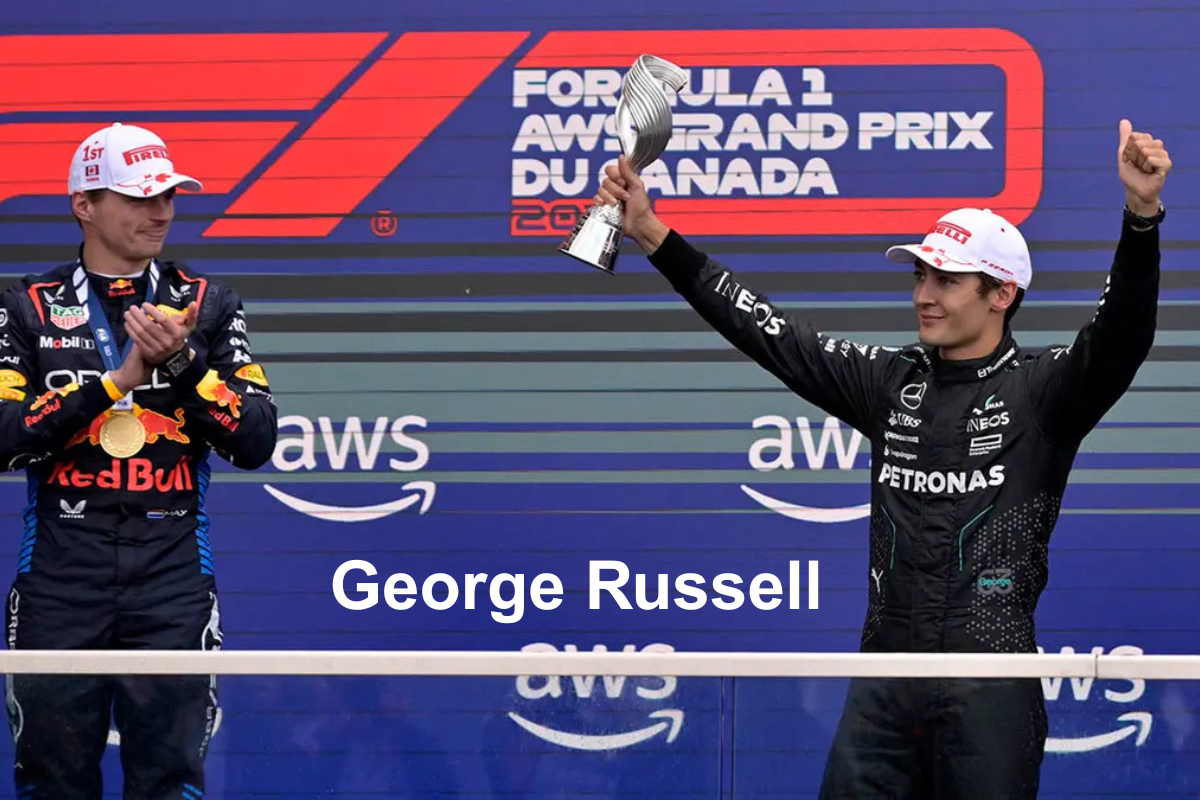
George Russell has become one of the most intriguing figures in modern Formula One. His racing history combines measured technique, strong mental control and an ability to adapt to changing car behaviour over long seasons. Russell’s development from small kart tracks in Norfolk to podium battles against some of the sport’s toughest drivers has created a story marked by resilience rather than early privilege. His career shows steady improvement, calculated decisions and a racing identity built upon consistency rather than recklessness. Across junior formulas, early hardship at Williams, breakthrough moments at Mercedes and unpredictable clashes with Max Verstappen, Russell has shaped an image of a driver focused on learning every season rather than relying on a single flash of success.
Early Life and Family Background
George William Russell was born on 15 February 1998 in King’s Lynn, Norfolk. He grew up with two older siblings and supportive parents who understood his interest in racing long before he reached professional circuits. Russell’s childhood involved school commitments during the week and karting commitments on weekends, with the family often travelling across the country to reach smaller tracks. These early experiences taught him how to manage pressure while improving technical understanding of racing lines, braking zones and handling balance. Although the family did not come from a well-known motorsport background, they gave Russell organisational support and practical help to attend events. The environment encouraged focus and self-discipline, values that remain central to his personality today.
Karting and Junior Categories
Karting marked Russell’s first steps into serious competition. Even at a young age, he showed an ability to remain composed when other drivers around him were aggressive. Karting races can become unpredictable, but Russell learned to manage wheel-to-wheel battles without panic. He developed listening skills for engine noise and taught himself to anticipate tyre wear. These fundamentals became important years later in variable track conditions in Formula Two and Formula One.
Russell progressed to BRDC Formula 4 in 2014, where he won the championship. The move from karting into junior single-seaters demanded new knowledge regarding aerodynamic influence, braking strategies and tyre temperatures, yet he adapted at impressive pace. In 2017, he entered the GP3 Series with ART Grand Prix and continued to grow in confidence. The combination of strong qualifying performance and steady race pace allowed him to take the championship that year. The following season in Formula 2 saw Russell display long-distance race control, smart tyre usage and maturity that outshone drivers with similar raw speed. Winning the 2018 Formula 2 Championship established him as a clear future Formula One candidate.
Williams and the Reality of Formula One
Russell’s first years in Formula One began at Williams in 2019. The team faced major technical challenges and frequently lacked pace, which placed Russell at a disadvantage compared to drivers joining stronger teams. However, he approached this period with determination rather than frustration. He used weak machinery as an opportunity to build consistency and develop race strategy knowledge. Qualifying sessions became his showcase. Russell regularly pushed the car into Q2 and earned the nickname “Mr Saturday” as he consistently performed above expectation. Although he had few chances to score points in standard race conditions, he treated every session as an opportunity to improve understanding of tyre behaviour, fuel loads and track evolution.
In 2020, Russell substituted for Lewis Hamilton at Mercedes during the Sakhir Grand Prix. That weekend, he demonstrated race-winning potential by leading the race before a pit stop error and a late puncture prevented victory. This performance changed public perception and proved he could manage a top car and control race pace under pressure. Russell continued with Williams through 2021, developing further technical feedback skills and increasing his understanding of how to influence car set-ups.
Mercedes and Step Up to the Front
Joining Mercedes in 2022 marked a shift from survival racing to championship contention. Russell worked through balance problems in early development of new aerodynamic regulations. Mercedes struggled with porpoising and unpredictable ride behaviour, but Russell remained patient. His maiden Formula One victory at São Paulo in 2022 showcased skills built through years of steady improvement: measured overtaking decisions, consistent tyre management and psychological control while leading a race. Working with Mercedes engineers, he contributed feedback that helped guide design decisions for future car direction.
Mercedes value Russell for his calm tone during team radio communication and his preparation between sessions. He studies data with engineers and conducts extended simulator sessions to support early weekend strategy planning. The ability to offer clear technical input makes him an essential part of ongoing car development and long-term Mercedes structure.
Rivalry with Max Verstappen
Russell’s rivalry with Max Verstappen has developed into a major talking point in recent seasons. Their differences stem from contrasting driving approaches. Verstappen uses instinctive aggression and takes control of defensive fights early in races, while Russell uses a composed style better suited to tyre preservation and long-run strategic rhythm. These differences created heated moments at circuits including Qatar, Spain, Las Vegas and Baku. Post-race comments from both drivers have added tension and raised expectations whenever they share the track.
Privately, Russell acknowledges Verstappen’s speed at circuits dominated by high-speed corners such as Suzuka and Silverstone. He understands that Red Bull’s aerodynamic stability gives Verstappen confidence to commit fully at entry. However, this understanding does not stop Russell trying to challenge him tactically through pit strategy and tyre programme decisions. Their rivalry reflects a modern Formula One narrative where technical differences between machinery are as significant as personality clashes inside cockpits.
Driving Style and Race Mindset
Russell races with smooth input control, steady steering angle and progressive throttle. He prefers predictable car response rather than unstable snap correction, which protects tyre surfaces across long races. This driving identity makes him strong on safety car restarts and defensive positioning when rivals approach from behind. Russell also reacts quickly to grip changes caused by cloud movement, wind shifts or rubber build-up from previous sessions. His race mindset focuses on waiting for opportunities rather than forcing openings too early.
Lifestyle, Training and Personal Discipline
Outside racing, Russell follows structured training programmes that include cycling, gym work and simulation practice. He treats recovery as part of training, using hydration, sleep control and stretching routines to maintain energy during global travel. Russell keeps private life separate from Formula One demands. He rarely shares family information publicly and prefers quiet preparation over public exposure before race weekends. This lifestyle supports his racing values, helping him concentrate on technical performance rather than media distractions.
Net Worth and Earnings
As of 2025, public sources estimate George Russell’s net worth at around US $16 million.Part of this wealth comes from his base salary at Mercedes AMG Petronas Formula One Team, reported to be approximately US $15 million per year in 2025.Additional income likely flows from race bonuses, sponsorship deals and endorsements.
By reaching this level of earnings, Russell has secured financial stability that reflects his rise from junior categories, through struggle in under-powered cars, to a leading role in one of the sport’s premier teams. While the salary alone positions him among Formula One’s higher-paid drivers, his off-track discipline, contract security and growing prominence enhance his long-term financial outlook.
The Two Areas Where Bullet Points Apply
Notable breakthroughs in Russell’s career
- Winning the 2018 Formula 2 Championship after a season of dominant qualifying and strong long-run pace
- Scoring his first Formula One win at São Paulo in 2022 after strategic control under pressure
- Taking over as a major team voice at Mercedes during technical development cycles
Key rivalries and turning points
- Verbal and on-track clashes with Max Verstappen at key circuits
- Long progression through early Williams seasons that demanded perseverance
- High performance showing during his substitute drive for Lewis Hamilton in 2020
Future Outlook and Next Steps in Formula One
Russell’s future will depend on Mercedes’ response to upcoming regulation cycles and continued adaptation to competitive pressure from Red Bull and McLaren. As younger drivers such as Oscar Piastri and Lando Norris rise into championship contention, Russell positions himself as a balanced challenger with both experience and room to grow. He has already proven his readiness to fight for victories under high stakes and shows potential to contend for a championship if machinery catches up to ambition.
Moving forward, Russell will likely continue refining decision-making in close battles, especially when facing Verstappen in scenarios where aggressive positioning becomes unavoidable. The combination of disciplined driving style, strong technical communication and long-term experience in lower-performing cars could one day provide the final tools needed to secure a title. Regardless of whether this happens soon or later in his career, Russell remains a respected driver known for contributing intelligence and strategic thinking to Formula One’s evolving landscape.
Conclusion
George Russell’s journey through motorsport shows how patience and steady improvement can achieve results in an industry where speed often overshadows process. He did not appear in Formula One as a ready-made star with a dominant car, and his early seasons at Williams required endurance, tactical thinking and quiet belief rather than loud statements or instant podiums. Those years built habits that later helped him excel in Mercedes’ demanding environment, where technical communication, tyre accuracy and clarity during complex sessions hold greater value than simple aggression.
Across rivalries, especially with Max Verstappen, Russell has demonstrated that skill alone does not decide success in Formula One. Timing, car set-up strategy and mental stability shape outcomes just as much. He has developed into a driver respected not only for speed but also for discipline behind the wheel. That combination places him in a position to challenge for victories whenever machinery aligns with ambition. Russell’s net worth now reflects years of effort spent climbing through junior series, managing unfavourable equipment at Williams and seizing opportunities in stronger machinery at Mercedes.
What makes Russell compelling is that his story remains in motion. He still has room to grow as a race leader and still faces challenges against rivals capable of taking championships in the coming seasons. Yet each year, he adds experience, technical understanding and strategic insight. Whether he becomes a world champion is unknown, but the path he has followed proves he already belongs among Formula One’s most disciplined and attentive drivers. Wherever the sport moves next, George Russell will continue shaping his career through precision rather than impulse, reflecting a modern style of Formula One that rewards intelligence as much as speed.
FAQs
What caused the Verstappen–Russell fight rumours in the first place?
Reports of a “fight” mainly come from heated on-track radio moments and close wheel-to-wheel clashes, especially during qualifying at races like Qatar and Baku. They have never had a physical altercation, but their competitive language has created headlines suggesting conflict.
What does “George Russell/Max Verstappen AO3” usually refer to?
When people search this term, they are typically looking for fan-written stories involving George Russell and Max Verstappen on Archive of Our Own (AO3), a creative writing platform. These stories are fictional and not linked to real events in Formula One.
What happened between George Russell and Max Verstappen in 2024?
In 2024, the pair had multiple tense encounters on track that included racing incidents, penalty discussions and public comments. The most notable exchanges came during qualifying at the Qatar Grand Prix where Verstappen received a grid penalty after impeding Russell, which led to a visible break in respect between the two drivers.
Did George Russell and Max Verstappen ever have dinner together?
There is no official confirmation of a private dinner between them. Stories about dinner usually come from fans or podcasts discussing hypothetical relationship repair behind the scenes. Their rivalry has mostly played out in front of cameras rather than through off-track meetups.
Are George Russell and Max Verstappen friends again now?
At the moment, they are not known to be close friends. Their relationship is professional but distant. Both drivers have said they respect each other’s pace but do not have easy communication, and there is no public sign that they have resolved tension fully.
What is George Russell’s height?
George Russell is approximately 1.85 metres tall, making him one of the taller drivers on the current Formula One grid. His height sometimes influences seating position setup and pedal distance within the car.
Do Verstappen and Russell race differently during close battles?
Yes. Verstappen tends to attack early, commit fully and hold position aggressively through corner entry. Russell prefers measured defence, late-race strategic play and predicting tyre life windows before making a move. This difference often leads to friction in high-speed sections.
Why do so many fans follow the Russell–Verstappen rivalry?
It is popular because it involves contrasting personalities, different racing languages, historic qualifying controversies and unpredictable on-track outcomes. Fans enjoy following two young drivers who are both confident, technically capable and unwilling to give space when it counts.